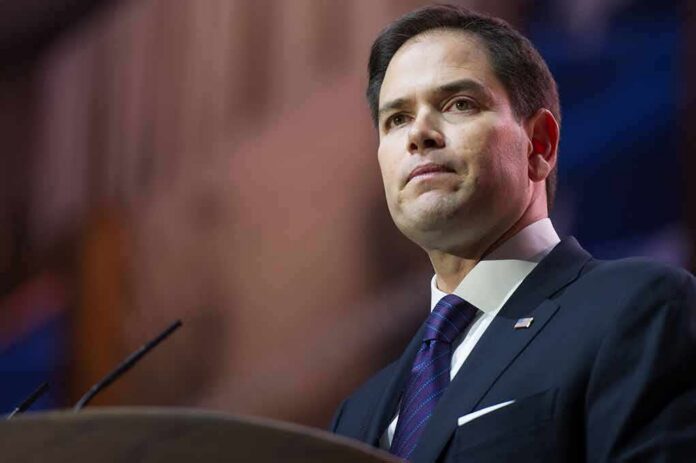
Cuba’s top diplomat accused Secretary of State Marco Rubio of “pressuring and blackmailing” foreign leaders ahead of a United Nations vote on the U.S. embargo, even as Washington confirmed Rubio called at least one president to push U.S. priorities.
Story Snapshot
- Cuba’s foreign minister alleged Rubio worked to sway leaders before a UN embargo vote.
- The State Department confirmed Rubio phoned El Salvador’s president on October 13 about UN priorities.
- The United States urged countries to oppose or abstain on the Cuba resolution in prior sessions.
- Public records do not show a threat or a changed vote tied to Rubio’s outreach.
Cuba Names Rubio, Alleges Pressure Campaign Before UN Vote
Cuban Foreign Minister Bruno Rodríguez said on October 14 that Secretary of State Marco Rubio contacted “various countries” to change their votes on the annual resolution criticizing the U.S. embargo. He posted the charge on the social platform X and used terms like “pressuring” and “blackmailing.” Reports describing his post identified the actors, the target governments, and the goal of shifting votes away from backing Cuba at the United Nations General Assembly later in October.
The Cuban allegation arrived during the run-up to the scheduled late October vote. The claim focused on outreach linked to the resolution that urges an end to the embargo. Cuba framed the effort as coercion. The United States framed its push as normal diplomacy. The divide reflects a long fight over Cuba policy. It also highlights the wider debate over what is firm advocacy and what is undue pressure in international politics.
U.S. Confirms Call To Bukele; Describes Routine Diplomacy
The State Department confirmed Rubio spoke by phone with Salvadoran President Nayib Bukele on October 13. The department’s account said Rubio urged Bukele to join the United States and like-minded partners in advancing shared priorities at the United Nations. Coverage also described discussion of security cooperation. The public readout did not include threats, inducements, or a quid pro quo. It did not state that El Salvador would change its vote on the Cuba measure.
Available reports identify only Bukele by name among the alleged contacts. They do not list other leaders or provide records of additional calls. Without transcripts, diplomatic cables, or statements from those governments, the record shows outreach but not the use of blackmail or force. It also does not tie any change in a specific country’s vote to Rubio’s contact. The evidence supports that Washington lobbied allies. It does not prove coercion beyond Cuba’s accusation.
UN Voting History Shows U.S. Opposition, Broad Backing For Cuba’s Resolution
The United Nations General Assembly has adopted a resolution calling for an end to the U.S. embargo against Cuba for decades. In 2025, the Assembly recorded 165 votes in favor, 7 against, and 12 abstentions. The United States urged delegates to vote against the resolution or abstain during that debate. That history shows Washington’s clear policy stance and a consistent global pattern supporting the Cuba resolution, despite U.S. opposition.
Thank you Secretary Rubio and thank you America for sanctioning the rogue court.
Ironic that the Nobel committee honors one of the leading purveyors of the modern-day blood libel—the false “genocide” and “apartheid” accusations against Israel—the same week the UN has effectively…— Zlatko Zigic (@ZigicZlatko) October 10, 2026
The lopsided voting record explains why U.S. officials worked phones before the next vote. A large pro-resolution bloc means any small shift could help the United States reduce Cuba’s diplomatic wins. Cuba sees that push as pressure. U.S. officials call it coalition-building. The facts on record show both the Cuban claim and the U.S. call occurred. They also show that the United States publicly opposed the resolution and sought votes to blunt it, as in prior years.
What This Means For U.S. Policy And American Interests
President Trump’s administration has made countering hostile regimes a core aim. That includes denying Cuba international cover while the regime jails dissidents and censors speech. Outreach to partners before a high-profile United Nations vote fits that agenda. It is common for governments to lobby allies on major resolutions. The question raised by Cuba is about method. The public record to date shows advocacy, not blackmail. More documents would be needed to show otherwise.
For conservatives, the stakes are clear. American policy should not bow to forums that hand wins to communist regimes. It should defend freedom, rule of law, and the right of sovereign nations to stand against oppression. Pressing partners to vote with the United States aligns with those goals. Cuba’s accusation tries to flip that script. The documented facts confirm U.S. outreach and past opposition to the resolution. They do not confirm coercion or a forced change in any vote.
Sources:
youtube.com, rfi.fr, english.news.cn, fakti.bg