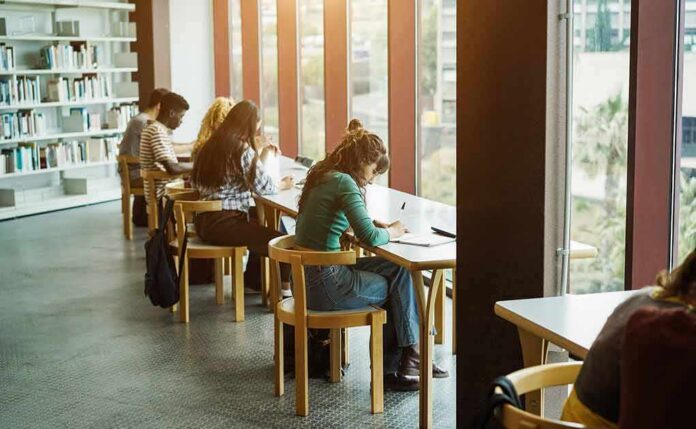
Independent surface tests reportedly found E. coli and fecal coliforms on public tables and computer keyboards inside Santa Monica’s Main Library, renewing anger over basic sanitation in a taxpayer-funded space.
Story Highlights
- Outside contractor’s sampling reportedly detected E. coli and fecal coliforms on library surfaces.
- Santa Monica Coalition demands a temporary shutdown, deep cleaning, and retesting.
- City officials say the results are unverified and want to review methods and lab records.
- City cites 440 weekly cleaning hours and nearly $500,000 in added custodial funding.
Reported Findings Inside a Public Library
FOX 11 reported that the Santa Monica Coalition hired West Coast Environmental Testing to sample high-touch spots on September 19, 2026. The report said tables, computer keyboards, and other surfaces tested positive for fecal coliforms and E. coli. Physician Houman Hemmati said those organisms should not be on public-use surfaces where families gather and children learn. A separate outlet confirmed the dispute over the findings and noted the city’s push to review the underlying lab work before acting.
The coalition argues the contamination claims reflect a breakdown in basic upkeep at a major civic space. The group called for a temporary closure, a thorough scrub, and public retesting before reopening. Their request focuses on a simple sequence that taxpayers can measure: shut down, deep clean, then prove the fix with fresh results posted for all to see. The demand aims to keep politics out and put accountable steps first, using a clear pass-or-fail retest to guide reopening.
The City’s Response and What Is Not Yet Proven
City officials said they have not verified the results and will not draw conclusions until they review the testing methods, the laboratory, and chain-of-custody details. Leaders also said the findings may not reflect conditions across the entire building. The city highlighted an existing cleaning operation of more than 440 weekly custodial hours and nearly $500,000 in added funding for deeper cleanings across library branches this year. A second report echoed the city’s call for review before action.
Hoodline described fecal coliforms and E. coli as indicator organisms, which flag possible fecal contamination but do not, by themselves, prove an illness risk or a direct link to human waste. The city and independent accounts have not reported any confirmed illnesses tied to the library. These gaps matter for scope and risk, but they do not excuse dirty high-touch areas. Clean surfaces and quick verification protect families and staff while the paperwork gets checked.
Accountability Steps That Respect the Public
Public health guidance stresses two things at once: regular cleaning works, and good sampling records matter. The Centers for Disease Control and Prevention says contaminated surfaces can host germs, so crews must clean on a set schedule and when dirty. The United States Environmental Protection Agency stresses chain-of-custody to track who handled each sample and when. Together, these basics help confirm a real problem and a real fix, not politics or guesswork.
City leaders can settle this fast. First, release the full lab report if they have it, or request it from the coalition and the contractor. Second, run an independent, statistically sound resampling within days, covering tables, keyboards, restrooms, and controls across all floors. Third, post the plan, the methods, and the pass-or-fail thresholds for the public to see before the first swab. Clear proof builds trust, protects families, and honors every tax dollar spent on cleaning.
Why This Matters Beyond One Building
Libraries are supposed to be safe, quiet anchors for community life. Parents should not carry sanitizing wipes to shield kids from filth on a city computer. When a city spends hundreds of thousands more on cleaning, surfaces should test clean. If they do not, leaders must fix the process, not spin the story. That starts with rapid deep cleaning now, followed by open, independent retesting and results shared in plain English that any resident can check.
WOW 🚨 There is mounting pressure to shut down the Santa Monica public library in California after E. coli and FECAL MATTER has been found on multiple surfaces like tables and computer keyboards
Residents say the library has essentially become a homeless shelter, “It's a…
— Joseph Ferris ( Boopsy) (@bupc_boopsy) October 14, 2026
President Trump’s administration has pressed for order, transparency, and safe streets. Local leaders should match that standard. Stop the finger-pointing, publish the records, clean the building, and prove it with data. If the retest clears the library, great—reopen with confidence. If not, keep cleaning and retest until it does. Families deserve clean tables, clean keyboards, and honest numbers, not excuses. The path is simple: show the work, protect the people, and respect the public trust.
Sources:
thegatewaypundit.com, westsidecurrent.com, foxla.com, ground.news, x.com, santamonica.gov