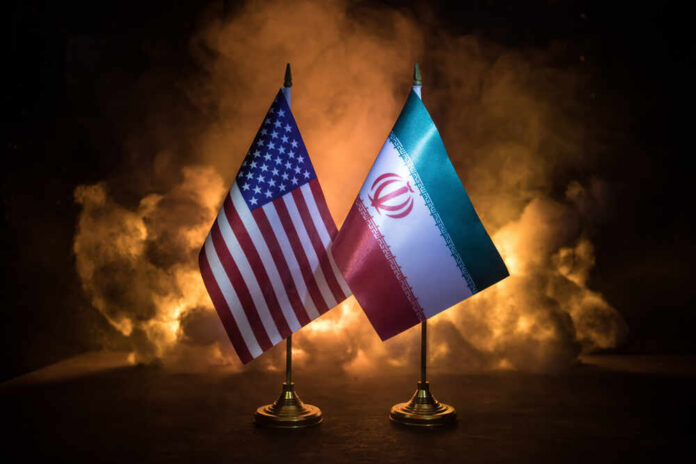
A Yale-educated analyst who accurately predicted President Trump’s re-election and the subsequent US-Iran conflict now warns America faces defeat in a war that bypassed Congressional approval and threatens to reshape the global order.
Story Snapshot
- Professor Xueqin Jiang predicted Trump’s 2024 victory and current Iran conflict in May 2024, earning “China’s Nostradamus” nickname
- Operation Epic Fury launched February 28, 2026, killing Iran’s Supreme Leader without Congressional authorization, sparking retaliatory strikes
- Iran’s blockade of Strait of Hormuz threatens 90% of Gulf food supplies while oil prices surge amid economic warfare
- Jiang warns Iran’s 20-year preparation, strategic terrain, and attrition tactics position America for unprecedented defeat
Analyst’s Dire Warning on Unconstitutional War
Professor Xueqin Jiang, a Chinese-Canadian educator with 1.9 million YouTube subscribers, issued three predictions in May 2024: Trump’s re-election, a US-Iran war under Trump driven by Israeli interests, and an American defeat. Two predictions materialized by February 2026 when Operation Epic Fury commenced without Congressional debate or approval. This constitutional breach mirrors the overreach patriots have long warned against—presidents waging war without the checks our Founders established. Trump’s March comments dismissing oil price spikes as a “small price to pay” ring hollow when American families shoulder billions in costs for strikes critics label illegal from the outset.
The Yale graduate’s analysis rests on geopolitical realities, not mysticism. Jiang compares the conflict to Athens’ disastrous Sicilian Expedition in 415 BC, where terrain and overextension destroyed a superpower. Iran’s mountainous geography, 90-million population, and two decades of military preparation create conditions no occupation can overcome. The Islamic Revolutionary Guard Corps sought this confrontation after years of perceived US interference, turning Trump’s second term into the catalyst. Pentagon plans extending operations through September 2026 suggest officials recognize the quagmire ahead, contradicting Trump’s premature “very complete” victory claims following a Putin phone call.
Iran’s Strategic Chokehold on Global Economy
Iran’s retaliation centers on economic warfare through the Strait of Hormuz, the narrow waterway carrying vital Gulf Cooperation Council supplies. The blockade disrupts 90% of food shipments to GCC nations while targeting oil infrastructure across the region. Tehran oil depot strikes on March 7 exemplify the tit-for-tat bombardments continuing with no resolution in sight. This strategy leverages decades of “practice runs” preparing for exactly this scenario. Jiang notes Iran need not win militarily—merely survive the attrition while global energy markets convulse and American taxpayers fund prolonged aerial campaigns against hardened targets.
The conflict exposes how quickly military adventurism spirals beyond control. US-Israel forces killed Supreme Leader Ali Khamenei on February 28, targeting nuclear and missile sites in joint strikes. Iran responded with missiles hitting Israeli territory and US bases, closing regional airspaces and spreading West Asia instability. Trump’s rhetoric about “safety and peace” clashes with surging oil prices and Pentagon intelligence expansions in Florida for sustained operations. This isn’t the limited engagement sold to Americans—it’s open-ended warfare serving foreign interests while bypassing the constitutional requirement for Congressional war declarations, a violation that should alarm anyone who values limited government and the rule of law.
Historical Patterns and Constitutional Concerns
Jiang’s “Predictive History” approach examines how empires repeat catastrophic mistakes when leaders ignore terrain, demographics, and adversary preparation. His March 2 appearance on Breaking Points podcast emphasized Iran’s advantages in a war of attrition—advantages Pentagon planners clearly underestimated when authorizing strikes without legislative oversight. The parallels to ancient Athens are instructive: overconfidence, strategic overreach, and underestimating a prepared enemy defending home territory. Whether Jiang’s third prediction—American defeat “forever changing the global order”—proves accurate remains uncertain, but the trajectory troubles anyone who remembers costly Middle East entanglements draining resources while constitutional safeguards erode.
The broader implications extend beyond one conflict. Trump supporters elected a president promising to end endless wars and prioritize American interests, not expand military commitments serving Israeli objectives without congressional debate. The administration’s unilateral action undermines the separation of powers that protects citizens from executive overreach. When commanders-in-chief bypass representatives to wage offensive wars, they erode the constitutional framework conservatives defend. Jiang’s warnings about reshaping global order may prove prescient if America exhausts credibility and resources in an unwinnable occupation attempt, validating adversaries who bet on democratic dysfunction and imperial overstretch while families at home suffer inflation and shortages from disrupted energy markets.
Sources:
Man dubbed ‘China’s Nostradamus’ shared his honest prediction on US-Iran war
‘Chinese Nostradamus’ claims he knows how Iran US war will end in explosive prediction