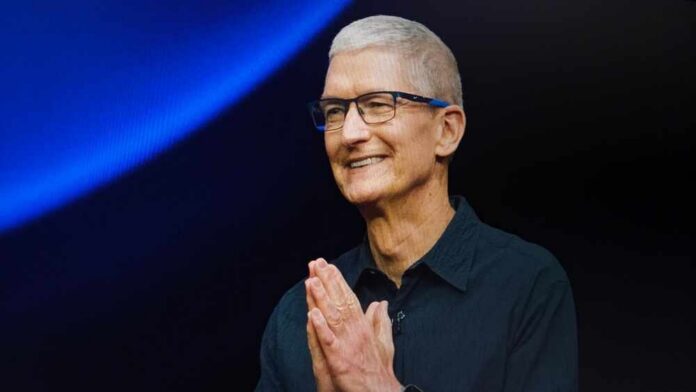
Apple’s leadership transition raises questions about whether corporate succession planning truly serves shareholders—or entrenched board members protecting their influence while American investors brace for market uncertainty.
Story Snapshot
- Tim Cook steps down as Apple CEO on September 1, 2026, transitioning to executive chairman after 15 years leading the tech giant
- Hardware engineering veteran John Ternus takes over as CEO, marking the first leadership change since Steve Jobs’ death in 2011
- Markets face near-term uncertainty despite Cook’s continued board involvement and planned five-month transition period
- The move reflects long-term succession planning but leaves investors questioning the timing and impact on Apple’s $3.6 trillion valuation surge
Cook’s 15-Year Tenure Ends With Planned Succession
Apple announced on April 20, 2026, that Tim Cook will transition from CEO to executive chairman, with John Ternus assuming the chief executive role effective September 1, 2026. Cook, now 65, took Apple’s helm in 2011 following Steve Jobs’ death and presided over explosive growth that added more than $3.6 trillion to the company’s market value. The Board of Directors unanimously approved the succession plan, characterizing it as the culmination of thoughtful long-term planning rather than an abrupt departure.
Hardware Chief Ternus Takes the Reins
John Ternus, Apple’s senior vice president of Hardware Engineering, has long been rumored as Cook’s successor and will join the board of directors upon assuming the CEO position. In an internal memo to employees, Ternus emphasized his intention to remain “very hands-on” in his new role, signaling continuity in Apple’s product-focused culture. His engineering background positions him to lead continued innovation in hardware development, though questions linger about his readiness to navigate the broader strategic and political challenges Cook managed during his tenure.
Market Uncertainty Amid Leadership Shift
Technology analyst Jacob Bourne from eMarketer noted that while Cook’s retirement age makes the transition logical, markets may react negatively to near-term uncertainty. Cook’s new role as executive chairman—which includes engagement with policymakers worldwide—offers some investor reassurance, yet the timing of the announcement caught observers off guard. The structured five-month handover period through summer 2026 aims to ensure operational stability, but American shareholders accustomed to Cook’s steady leadership face legitimate concerns about whether Ternus can maintain Apple’s trajectory in an increasingly competitive and regulated global market.
Questions About Corporate Governance and Accountability
The transition reveals the double-edged sword of corporate succession planning. While boards tout seamless handovers as evidence of good governance, such processes often shield executives from accountability to shareholders who bear the financial risk. Cook’s move to executive chairman keeps him embedded in Apple’s power structure, raising concerns about whether new leadership can truly chart an independent course or whether entrenched insiders will continue calling the shots. For everyday Americans who invest in companies like Apple through retirement accounts, these elite-managed transitions feel increasingly disconnected from the principles of transparent accountability and merit-based leadership that built American enterprise.
Tim Cook to step down as CEO of Apple 🍎
Since taking over in 2011:
📈 $AAPL up over +1,900%
⌚ Apple Watch
🎧 AirPods
🥽 Apple Vision ProNow Apple turns to an Engineer next to steer
the ship: John Ternus— TheBetterBull 🐂 (@TheBetterBull) April 20, 2026
Cook described leading Apple as “the greatest privilege of my life” and endorsed Ternus as “the perfect person” for the CEO role, expressing optimism about the company’s future roadmap. Yet as government officials and corporate boards grow more intertwined—with Cook’s new role explicitly focused on policymaker engagement—Americans on both left and right should question whether these transitions serve innovation and shareholders, or simply preserve the influence of a managerial class more concerned with maintaining power than delivering results for the millions of citizens whose financial futures depend on these companies.
Sources:
Tim Cook to Become Apple Executive Chairman; John Ternus to Become Apple CEO
Who is John Ternus, Set to Succeed Tim Cook as Apple’s CEO
Apple CEO Transition: Tim Cook and John Ternus Share Internal Memos
Tim Cook to Step Down as Apple CEO, Hardware Chief to Take Over
Tim Cook Will Step Down as Apple CEO