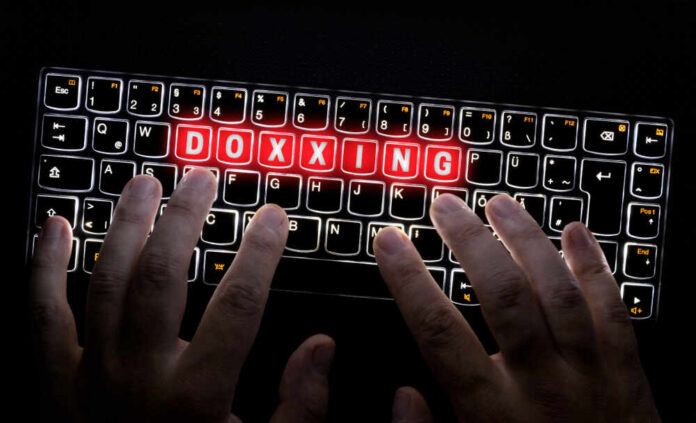
An influencer’s split-second “revenge post” forced an NBA player to flee his own home—showing how powerless ordinary Americans are against platform-enabled doxxing.
Story Snapshot
- Brooklyn Nets forward Michael Porter Jr. said an influencer leaked his home address to millions after a livestream dispute.
- Porter reported leaving the house immediately, contacting police, and starting the process of relocating.
- Reports identified influencer Celina Powell—who has a large Instagram following—as the person who posted the address.
- No arrests or confirmed platform enforcement actions were reported at the time of coverage.
Doxxing turns online drama into real-world danger
Brooklyn Nets forward Michael Porter Jr., 27, said he was forced to leave his home after his address was posted online, a modern threat that blends harassment with physical risk. According to reporting, the incident started during a livestream when influencer Celina Powell was removed or asked to leave. Porter later described panicking, contacting police, and preparing to “dip” to a new location as he began searching for a new residence.
Porter’s account of the timeline is straightforward: he learned the address had been shared publicly, left to protect himself, and then spoke about the incident after the fact. The coverage describes the Instagram post reaching a massive audience, which matters because scale is the accelerant in these cases. A private conflict becomes a public “pile-on” the moment personal details are broadcast, copied, and reposted across platforms that move faster than any formal safety response.
Power imbalance: massive audiences, minimal accountability
The central dynamic in this story is the power gap created by follower counts and platform reach. Powell reportedly has more than 3 million followers, which turns a single post into a megaphone. Porter, despite being a high-profile athlete, was effectively placed into a defensive crouch: secure the home, involve law enforcement, and relocate. The available reporting did not indicate whether the post was removed quickly or whether any enforcement action was taken.
That gap is also why doxxing has become a bipartisan pressure point. Conservatives tend to focus on personal security, property rights, and the idea that citizens should not be forced from their homes by intimidation. Liberals often focus on harassment and online abuse dynamics. In this case, the facts support a shared conclusion: a person’s basic safety can be destabilized almost instantly when private information is weaponized, and the victim’s practical options are limited in the moment.
Why the athlete-influencer ecosystem keeps producing these blowups
Porter is part of a growing group of pro athletes who stream and engage heavily online, a trend that blurs the line between entertainment and private life. The reporting framed the episode as a cautionary example of “real-life ramifications” for public figures who spend time in influencer spaces. Livestream culture rewards immediacy, clout, and confrontation, but it often lacks the guardrails that exist in professional workplaces where retaliation is more clearly punishable.
The story also shows how quickly “content” can become coercion. Doxxing is not merely embarrassing; it can impose real costs—moving expenses, heightened security, disruption to family life, and distraction from work. Those costs are the penalty, regardless of whether a court case ever happens. Limited details were available on any legal path Porter might take, and the reports did not include any response from Powell or a definitive account of subsequent platform action.
A policy question Washington can’t keep ducking
At a time when many Americans believe government is failing at core duties, this incident lands in a familiar frustration: the rules feel strongest for regular people and weakest for powerful institutions. The public expects platforms to curb targeted harassment, yet enforcement can appear inconsistent or slow. The public also expects law enforcement to respond, but police typically act after harm occurs, not at the moment a viral post spreads. That leaves citizens feeling exposed.
NBA star on the move after getting doxxed on social media https://t.co/lLOJoimk0X
— Chris 🇺🇸 (@Chris_1791) May 4, 2026
For conservatives, the takeaway is less about celebrity gossip and more about the country’s growing inability to protect normal life—home, family, and privacy—from digital mobs. For liberals, it underscores the persistence of online harassment that can spill into offline threats. The available reporting supports one clear point: once an address is blasted to millions, the burden shifts to the victim to escape the risk. That is an upside-down model of accountability.
Sources:
Caitlin Clark raises eyebrows with comment after team’s AI post showed distorted hand
NBA star on the move after getting doxxed on social media
NBA star on the move after getting doxxed on social media