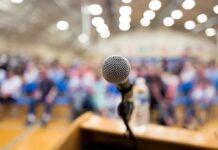
A Utah judge just told the defense in the Charlie Kirk murder case that courtroom cameras are staying on—even after media rule-breaking raised fears about turning a capital prosecution into a political spectacle.
Quick Take
- State District Judge Tony Graf denied Tyler Robinson’s request for a blanket ban on electronic media coverage in his aggravated murder case tied to Charlie Kirk’s death.
- Graf said livestreaming expands public access and government accountability, but he also acknowledged he cannot control misinformation outside the courtroom.
- The judge responded to prior media pool violations by tightening rules, including limiting camera angles and moving equipment to the rear of the courtroom.
- Electronic media requests now require 14 days’ notice, and coverage will be reviewed case by case instead of automatically allowed or barred.
Judge Graf Keeps Cameras Rolling, Rejects a Blanket Ban
State District Judge Tony Graf ruled May 8, 2026, that electronic media coverage will not be categorically barred from proceedings involving Tyler Robinson, 22, who is charged with aggravated murder in the September 10, 2025 killing of political figure Charlie Kirk. Robinson has not entered a plea and faces a potential death sentence, a reality that typically raises the stakes for any decision that might affect fairness, publicity, and impartial jurors.
Judge Graf’s written reasoning emphasized public access as a core function of courts in a self-governing society. He said electronic coverage helps people observe proceedings when courtroom space is limited, and he singled out livestreaming as a tool that can allow large numbers of citizens to watch government at work. At the same time, he recognized a modern complication: real-time video can be clipped, framed, and repurposed far outside the judge’s control.
First Amendment Access vs. Sixth Amendment Fair Trial Rights
The defense argued that a capital case demands heightened caution because the Constitution requires a reliable and fair process at critical stages. Their concern centered on whether widespread video and commentary could poison the jury pool before a trial even begins. Prosecutors and media organizations opposed the ban, and the victim’s widow, Erika Kirk, supported public access as a way to discourage conspiracy theories that have circulated since the assassination.
Graf’s decision attempts to hold two principles in tension without letting either one swallow the other. Americans expect open courts, especially in politically charged cases that invite rumors and partisan narratives. But the Sixth Amendment still requires an impartial jury, and modern media ecosystems can amplify prejudice faster than traditional news cycles ever did. Graf’s solution—case-by-case review rather than a sweeping rule—signals that future disputes will likely be fought over specifics, not slogans.
Restrictions Follow Media Violations and “Vilify the Defendant” Concerns
Judge Graf cited a practical reason for refusing to simply trust the system: media pool members previously violated courtroom orders, including capturing unauthorized close-ups and recording Robinson’s shackles. Those images can carry a powerful psychological effect, reinforcing guilt in the public mind before evidence is tested in open court. Graf also noted that some outlets used courtroom footage as a springboard for out-of-court commentary and coverage that “generally vilify the defendant.”
Rather than shutting cameras down, the court tightened procedures and limited what cameras can do. The judge moved equipment to the rear of the courtroom and positioned it behind the defendant to reduce the risk of sensational close-ups. This compromise reflects a traditional conservative instinct to apply targeted guardrails instead of blanket policies—especially when government power is involved—while still recognizing that in a polarized era, institutions earn trust through transparency and consistent enforcement.
Why the July Preliminary Hearing Matters More Than the Camera Fight
The next major milestone is the preliminary hearing, rescheduled to July 6–10, 2026, after the judge approved a defense motion to delay it. At that hearing, prosecutors must show there is sufficient evidence to move forward toward trial. Reports indicate the state has referenced DNA evidence and a confession, but public details remain limited in the available reporting, making the upcoming hearing a key moment for clarifying what can actually be proved in court.
New: Judge Makes Major Decision on Cameras in the Courtroom for Accused Charlie Kirk Assassin's Casehttps://t.co/HG8dqyrnOJ
— RedState (@RedState) May 9, 2026
For voters already skeptical that powerful institutions play by different rules, this case is a test of whether the system can keep proceedings open without letting the process turn into entertainment or political theater. Graf’s approach effectively puts responsibility on everyone—media, prosecutors, and defense—to follow the rules while the public watches. If the restrictions are enforced consistently, the court may preserve both transparency and fairness; if not, the camera debate is likely to return.
Sources:
Judge to rule Friday if Charlie Kirk murder case can be filmed and photographed
Hearing in Charlie Kirk murder case revives debate over cameras in courtrooms