
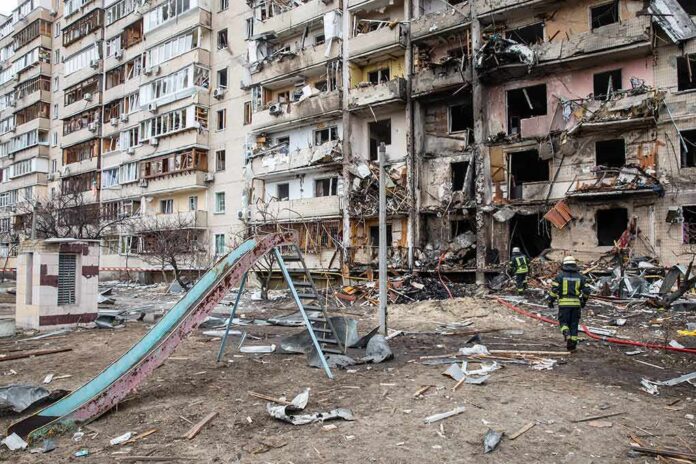
New CCTV footage shows a Russian strike slamming into a Kharkiv grocery store and street, killing civilians and igniting fires.
Story Highlights
- CCTV video captures a Russian strike hitting a residential street and grocery store in Kharkiv.
- Officials report at least three dead and around 20 injured, including children.
- Regional reports describe guided aerial bombs striking the Nemyshlianskyi district the same day.
- United Nations data show rising civilian harm from aerial bombs and long-range strikes in urban areas.
Cameras Capture Impact on a Residential Street
Al Jazeera published video that shows the moment a blast hits a Kharkiv neighborhood. The footage shows an explosion on a street by a small grocery store, with flames and debris following the strike. Ukrainian officials said three people were killed and about 20 were hurt, including two children. This clip gives a rare, direct look at how fast a strike can tear through a normal block. It also shows why civilian sites in cities face constant danger when bombs fall.
Ukrainian media and regional leaders said Russian forces used guided aerial bombs in Kharkiv that day. Reports cited an attack in the Nemyshlianskyi district that killed a 35-year-old woman and injured ten civilians, among them a seven-year-old boy. Those details match the pattern seen across Kharkiv in recent months: air-dropped weapons used near homes, shops, and clinics. Fire crews and police again had to work through smoke, unstable walls, and threats of secondary blasts.
Civilian Toll and Patterns From Prior Months
United Nations human rights reporting shows a clear rise in civilian casualties tied to aerial bombs and long-range urban strikes in 2025. In July 2025, aerial bombs caused 276 civilian casualties, up from 114 in June, marking a steep jump in harm from air-dropped munitions. June 2025 recorded 1,575 civilian casualties, with most caused by long-range strikes in cities like Kharkiv. These figures explain why single events, like the grocery strike, feel constant to residents who live under frequent alerts.
Other outlets have documented similar scenes in Kharkiv. Wire photos showed families mourning loved ones killed by airstrikes and neighbors clearing rubble after hits on homes in October 2026. International groups have also assessed repeated bombardments of residential areas in Kharkiv and warned that attacks failing to take proper precautions risk serious legal violations. While each incident has unique details, the through-line is consistent: explosive weapons in crowded places lead to dead and wounded civilians.
What This Means for U.S. Interests and Values
American conservatives care about peace through strength, secure borders, and honest spending. This war story still matters at home. Urban strikes that hit stores and apartments underline the chaos that comes when bad actors ignore basic rules of war. Clear facts help shape smart policy. The United States should back strategies that stop attacks on families, protect energy routes, and avoid blank checks. That starts with strong oversight and clear goals that serve American security and the Constitution.
President Trump’s team has pushed to cut waste, rebuild deterrence, and end endless wars. This incident shows why focus is needed. Russia’s use of aerial bombs in cities raises the cost for civilians and for any future rebuilding. U.S. policy should center on defending our interests, pressing for de-escalation that actually sticks, and making sure any aid supports defined outcomes. That means tracking results, guarding against mission creep, and keeping American energy strong to deny leverage to hostile regimes.
Local Impact in Kharkiv and the Road Ahead
Kharkiv residents now face trauma, damaged shops, and unstable buildings after the latest blast. Emergency crews must clear debris, restore power, and secure gas lines to prevent more fires. Medical teams must treat burns, shrapnel wounds, and shock. These tasks strain local budgets and families. When strikes hit ordinary places like a grocery store, recovery is personal and costly. The community must balance daily life with air alerts, curfews, and the threat of more guided bombs.
NEW FOOTAGE
The evening quiet in a residential suburb outside Kharkiv was shattered when a Russian missile strike directly hit a local grocery store and surrounding neighborhood streets. Newly released surveillance footage captures the harrowing final moments before the blast,…
— Satguy 141 (@satguy01) October 12, 2026
Officials will likely review shelter options, school schedules, and clinic backups to reduce risk. Experience from prior months suggests better blast walls, window film, and clear evacuation plans can save lives. But none of that replaces the core need: stopping attacks on civilian zones. The facts from the footage and the casualty reports are plain. Bombs in cities break families and drain communities. That is why precision, restraint, and real accountability are not slogans; they are the only path to fewer funerals.
Sources:
facebook.com, aljazeera.com, amnesty.org, kyivindependent.com, understandingwar.org, news.un.org