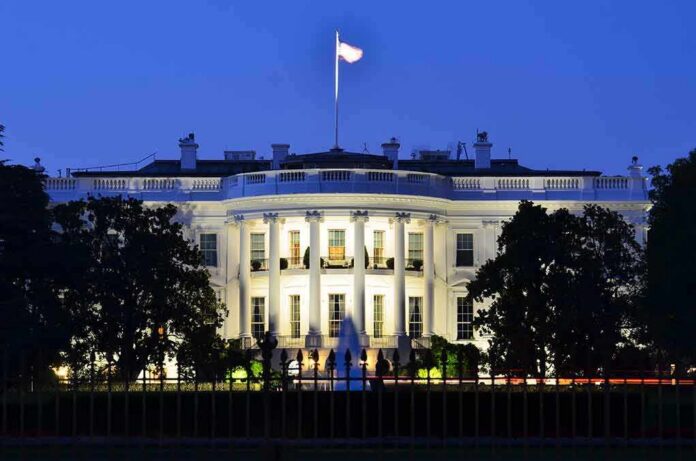
A new documentary spotlights President Trump’s plan for a permanent White House ballroom that replaces costly tents and expands secure event space by a wide margin.
Story Highlights
- The planned ballroom creates a permanent, secure venue and ends reliance on South Lawn tents.
- Capacity jumps from about 200 seats in the East Room to roughly 650 seated indoors.
- Private donations, including from President Trump, are described as the main funding source.
- Preservation groups warn about scale and cultural-landscape impacts despite a no-significant-impact ruling.
What The Project Actually Does
White House filings describe a roughly 90,000-square-foot addition with about 650 seated capacity, far above the East Room’s limit near 200. The plan creates a permanent, secure space so large events no longer push guests to temporary tents on the South Lawn. Federal documents say this reduces strain on utilities and support gear, and improves logistics and safety for state functions and high-attendance receptions.
Officials say the ballroom reduces the need for temporary structures that are expensive and hard to secure. Prior administrations used tents when events outgrew indoor rooms. Reports note President Trump tied the project to the practical goal of keeping events inside the security footprint, rather than shuttling guests outside under canvas. That shift aims to streamline set-up, entry screening, and emergency plans for large gatherings at the Executive Mansion.
How It Is Supposed To Be Paid For
The White House said President Trump and “patriot donors” would cover the cost through private gifts, limiting direct taxpayer exposure. Early statements placed total construction near $200 million. Later reporting cited higher rough figures, with some coverage listing numbers around $300 million or more. Public documents to date do not show a reconciled, final budget line or a complete donor list. That leaves open questions on the exact cost and full private commitments.
Supporters argue private funding respects taxpayers and mirrors past use of private gifts for certain White House projects. Skeptics point to the need for clear gift-acceptance records and guardrails. The administration can address concerns by releasing donor agreements and payment records. That transparency would show whether private money is, in fact, covering construction, and whether any federal funds, operations, or security budgets might still share indirect costs over time.
Why Preservation Groups Object
Preservation groups and some architects argue the addition is too large and risks overwhelming the historic design. A National Park Service letter summarizing the environmental review noted permanent adverse effects on the cultural landscape, even as the agency issued a finding of no significant impact. Separate reporting describes the proposed 90,000-square-foot size as nearly twice the main house, which critics say could disrupt balance and symmetry on the grounds.
CNN's Abby Phillip interrupts and cuts off Republican guest after he mentions President Trump is self-funding the White House ballroom. pic.twitter.com/z6TG5kfcem
— Leak Wire (@LeakWireQ) October 28, 2026
The federal record also shows moving targets on capacity claims and timeline. Officials announced about 650 seats, while later remarks mentioned space for 999 people, without a single published explanation for the change. The initial goal targeted completion within President Trump’s term, but other reporting cited a 2028 finish based on a National Park Service document. Those shifts fuel media doubt, even if the core mission to replace tents with a secure hall remains sound.
What It Means For Governance And Common Sense
Presidents have modernized the White House for generations to serve national needs. This project follows that pattern by addressing a clear, recurring problem: large events outgrew existing rooms and pushed people into tents. The documented benefits are straightforward—capacity, security control, and reliability in all weather. The credibility test now is strict accountability on cost, donors, and final specs, so the government gets the function promised without scope creep or avoidable overruns.
Sources:
youtube.com, ncpc.gov, socialnews.xyz, amp.dw.com, thehill.com, cnn.com, thedailystar.net