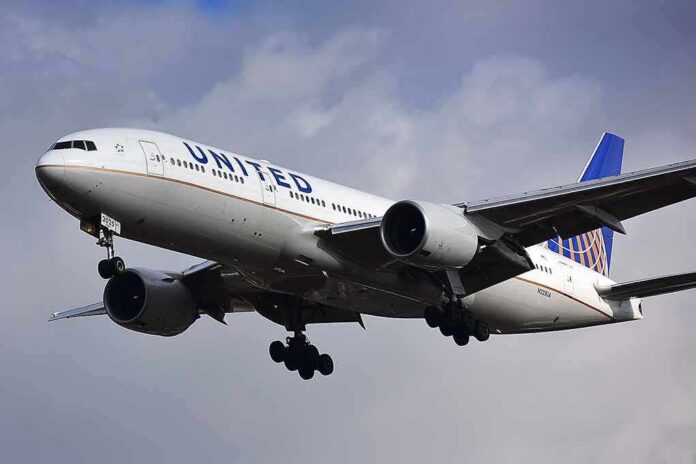
A United flight to New Orleans triggered a top-tier hijack alert after a passenger allegedly rushed the cockpit and claimed he had a bomb.
Story Highlights
- United Flight 2174 sent a highest-level hijacking alert after an attempted cockpit breach was reported.
- Deputies arrested 34-year-old Rony Alexander Gomez-Alberto after landing in Louisiana.
- The Department of Homeland Security said the suspect is a twice-deported Honduran national with an immigration detainer.
- Local charges include terror-related offenses tied to a false bomb claim, according to parish authorities.
Officials Report Cockpit Rush And Hijack Alert
United Flight 2174, flying from Newark to New Orleans, reported an attempted breach of the cockpit and sent a Level 4 hijacking alert, the top security warning used in such events, according to reporting that cited the airline and the Jefferson Parish Sheriff’s Office. Crew members responded in flight, and the pilots landed safely at Louis Armstrong New Orleans International Airport. Authorities said 46 passengers and six crew were aboard during the disturbance and response.
The Jefferson Parish Sheriff’s Office said the crew reported a passenger who acted irrationally and claimed he had a bomb. Deputies boarded the aircraft after it reached the gate and arrested the man without incident. Local television coverage showed officers leading a suspect away as passengers deplaned. Officials did not report finding an explosive device on the aircraft. Passengers were screened again, and the plane was secured before being returned to service later that day.
Suspect Identified; Immigration Detainer Lodged
Authorities identified the suspect as 34-year-old Rony Alexander Gomez-Alberto. The Department of Homeland Security said he attempted to gain entry to the cockpit during the flight. After his arrest, Immigration and Customs Enforcement lodged a detainer with the Jefferson Parish Sheriff’s Office, seeking custody transfer on immigration grounds. The Department of Homeland Security said Gomez-Alberto is a criminal illegal alien from Honduras who had been deported twice before this incident.
Reports citing the Department of Homeland Security said U.S. authorities removed Gomez-Alberto in 2011 after a Texas border crossing and again in 2014 after a New Mexico encounter. The accounts describe a pattern of illegal reentry after removal that can trigger federal penalties. Those prior removals do not change the local criminal case, but they increase the stakes for detention and removal once the state charges are handled by the parish and the courts.
Local Charges And How Aviation Law Treats Threats
Jefferson Parish authorities booked Gomez-Alberto on state charges that included communicating false information of planned arson and terrorizing. Other outlets described felony bomb-threat and disorderly-conduct counts based on the same conduct. These charges address threats and the disruption to the flight. Federal law also separately covers aircraft piracy, attempted piracy, and interference with flight crew, each with its own standards and penalties for threats and intimidation in the air.
Federal guidance explains that attempted aircraft piracy does not require a completed takeover and can apply even before an aircraft is airborne, if force, threats, or intimidation show wrongful intent to seize control. Prosecutors use different statutes for threats, crew interference, and attempts to control an aircraft; the choice depends on the facts established by investigators and witnesses from the flight and airline operations.
Security Response Fits Post-9/11 Protocols
Aviation security treats cockpit rushes and bomb claims as real until proven false, which is why pilots and airports trigger the highest alert levels. The Federal Aviation Administration reported a surge in serious unruly-passenger cases in recent years, which led to more referrals to the Federal Bureau of Investigation and stronger enforcement. These protocols aim to protect passengers and crews by moving fast when a cockpit or bomb threat is reported at altitude.
Illegal migrant arrested for bomb threat on United Airlines flight https://t.co/3JNIYEczfF via @DailyMail
— Brian Craig 🇺🇸 (@BrianCraigShow) November 11, 2026
This case also highlights the cost of border failures. The Department of Homeland Security says the suspect was twice deported and yet returned again. That is unacceptable when lives are at stake thousands of feet in the air. President Trump’s team has pushed for tougher interior enforcement and faster removals. Events like this show why strong borders, strict vetting, and zero tolerance for threats onboard are common-sense steps to keep families safe while they travel.
Sources:
thegatewaypundit.com, wwltv.com, foxnews.com, people.com, nypost.com, justice.gov