
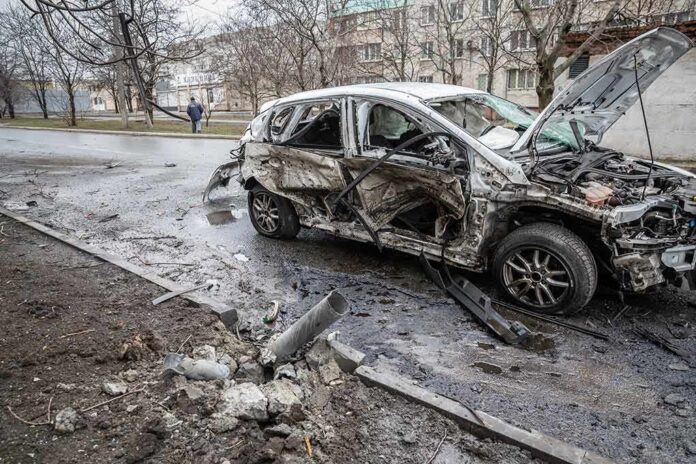
A car exploded on a busy Moscow street, leaving a well-known pro-Kremlin Ukrainian figure badly hurt and igniting a high-stakes hunt for who did it.
Story Snapshot
- Russian investigators opened a criminal case after a car exploded in southern Moscow.
- Reports say the injured driver was Sergei Zavorotny, an aide to former Ukraine Prime Minister Mykola Azarov.
- Some outlets say the probe is for attempted murder, but officials have not named suspects.
- No group has claimed responsibility, and the exact cause of the blast is not confirmed.
What Russian officials confirmed about the Moscow blast
Russian authorities said a vehicle exploded on Kirovogradskaya Street in Moscow’s Chertanovo district on November 13, 2026. The Investigative Committee opened a criminal case and sent investigators to the scene. Officials did not immediately identify suspects or list charges in their first statements. Early reports described a serious injury to the driver, who was taken to the hospital after the blast. These are the core facts Moscow investigators placed on the record so far.
Reuters-linked summaries and regional reports added timing and location details, describing the explosion as a major incident in southern Moscow that drew a rapid response. Officials have not released a forensic readout on the cause. Without that, public claims about the device type, placement, or detonation method remain unverified. Investigators have also not presented a case number or the specific criminal code articles tied to the probe, which limits what can be said with certainty at this stage.
Who was reportedly targeted and why that matters
Multiple outlets identified the injured driver as Sergei Zavorotny, a former spokesman or adviser to Mykola Azarov, Ukraine’s prime minister from 2010 to 2014. After leaving Ukraine, Zavorotny lived in Russia and became a pro-Kremlin voice in media. That profile could make him a target in the information war around the Russia-Ukraine conflict, which has seen violence and attempts on public figures. But identity details first flowed through Russian media, not a full official release, creating room for caution.
Some reporting says Moscow investigators are treating the case as attempted murder by a dangerous method. That points to intent if it holds up under review. Other credible reports say only that a criminal case is open, without a final label. The split shows how fast early narratives can form before documents land. No one has been named as a suspect, and no group has claimed the attack, which keeps motive and authorship open for now.
Competing claims on cause, with no forensic answer yet
A separate account from The Moscow Times presented another version of events, suggesting a fault in the car’s gas equipment could have triggered the blast. That would point to a tragic malfunction, not a hit. At the same time, security-linked Telegram channels pushed an unverified claim that a device was planted under the seat and detonated remotely. Neither story is proven without forensic confirmation, and officials have not published that detail yet.
Former Ukrainian official aide Sergei Zavorotniy was severely injured in a car bombing in Moscow, marking the second high-profile explosive attack targeting prominent figures in Russia within 48 hours. pic.twitter.com/LxdRYHTNkN
— Azat TV (@azattelevision) November 13, 2026
Another report said the public record does not yet establish if Zavorotny was the intended target or simply the vehicle’s owner, and that no claim of responsibility has been filed. That uncertainty matters because it shapes risk and response. If the explosion was a targeted attack, it fits a wider pattern of political violence around the war. If it was a mechanical failure, it tells a very different story. Only lab work and a full case file can answer that.
Why this incident fits a wider and dangerous pattern
Attacks on high-profile figures have surged around the conflict. Freedom House has tracked a string of assassinations and attempts tied to Russian operations since 2014. Analysts warn that both Russia and Ukraine have used covert or deniable methods during the war. That is why early blame often misses the mark. Responsible reporting starts with verifiable facts, then waits for chemical tests, blast signatures, and device fragments before drawing lines to any actor or state.
What matters for Americans and our allies right now
U.S. readers should care because this kind of strike, if confirmed as intentional, shows how modern conflicts spill into cities with civilians nearby. It raises security and energy risks markets watch closely. It also shows how propaganda moves faster than proof. President Trump’s team has pressed for strong borders and clear eyes on foreign threats. That means demanding evidence before blame, while staying ready to counter any group that brings political violence into public streets.
What to watch next from investigators
Key next steps include an official identity confirmation from investigators or the hospital, the release of the legal classification in writing, and a basic forensic summary that answers whether a device was planted. Look for residue tests, fragment recovery, and a diagram of the blast pattern. Watch for any arrests, search warrants, or court filings. Until those arrive, the only firm ground is that a car exploded, a man was badly hurt, and a criminal case is open in Moscow.
Sources:
zerohedge.com, kalminer.com.au, cnn.com, theins.press, charlotteobserver.com, euromaidanpress.com, monoscoops.com, kens5.com, citizenlab.ca, agentura.ru