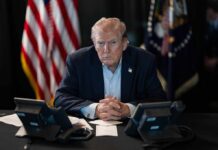
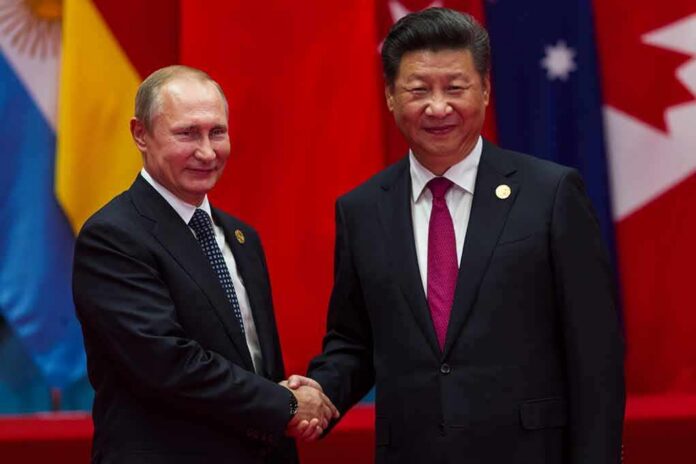
President Trump, China’s Xi Jinping, and Russia’s Vladimir Putin held a first-of-its-kind closed-door summit in China focused on nuclear risks and global security, marking a rare direct channel among the world’s top nuclear powers.
Story Highlights
- Trump, Xi, and Putin met behind closed doors during the APEC summit in Shenzhen.
- White House and Kremlin confirmations underscored the meeting’s official weight.
- Leaders focused on nuclear arms and live conflicts, including the war in Ukraine.
- No signed agreement was announced, but leader-level dialogue opened a direct line.
Historic Leader-Level Contact Confirmed by Washington and Moscow
Associated Press reported that President Trump, China’s Xi Jinping, and Russia’s Vladimir Putin convened an unprecedented trilateral meeting on the sidelines of the Asia-Pacific summit in Shenzhen. The White House confirmed the plans on Friday, and the Kremlin confirmed them on Saturday, giving the summit formal backing from both capitals. The format brought the three leaders together to address security challenges that affect Americans, allies, and markets, including nuclear risk and active wars.
The meeting’s setting in China put global rivalry and security front and center. Reporting described the event as overshadowing the summit’s usual trade focus as big-power politics took the lead. Trump’s team set expectations around practical engagement with nuclear peers rather than a public show. Leaders were also expected to hold separate bilateral sessions, allowing focused talks on issues that require different tracks with Beijing and Moscow.
Focus on Nuclear Risks and Ongoing Conflicts
Associated Press stated the leaders planned to discuss nuclear arms and global security at the closed-door session, a first in this trilateral format. The Ukraine war remained a key pressure point for any talks with Russia. Trade and technology tensions with China also loomed, including fights over agricultural purchases and critical minerals, which continue to affect supply chains and prices felt by families at home. The structure sought to stabilize communication among nuclear powers despite sharp disputes.
Analysts cited by international outlets said such summits often work as crisis signaling, keeping lines open to prevent worse outcomes even without fast breakthroughs. That pattern fits this meeting. Leaders signaled that rivalry remains manageable enough to talk, even while disagreements on sanctions, trade rules, and battlefield issues stay unresolved. For Americans, steady channels can reduce the chance of miscalculation that could threaten our troops, allies, and economy.
What Was Achieved and What Comes Next
Associated Press coverage did not identify a signed agreement, ceasefire, or arms-control commitment emerging from the session. The reporting even allowed that the summit could prove historic or fade as a photo moment, reflecting the reality that outcomes depend on follow-through. Still, a direct line among Trump, Xi, and Putin now exists at the leader level. That matters when minutes count, such as during military incidents or sudden strikes that can rattle markets and raise war risks.
The open portion of the talks between Putin, Xi Jinping, and Trump lasted over 10 minutes. Here are the key statements:
🇷🇺 Vladimir Putin:
▪️ During today’s meeting with Trump—held at the U.S. leader’s initiative—significant attention was devoted to the conflict in Ukraine.
▪️… pic.twitter.com/aVxyKJ3BD5
— RussiaNews 🇷🇺 (@mog_russEN) November 19, 2026
Next steps will show whether the channel produces results. A formal United States readout, any joint statements, or notices about working groups would mark progress. Watch for updates on nuclear risk talks, conflict de-escalation, and trade or technology guardrails. For conservatives focused on peace through strength and energy security, concrete movement on sanctions clarity, critical minerals, and military deconfliction would signal that tough, direct engagement under President Trump can shield American families from higher costs and new wars.