
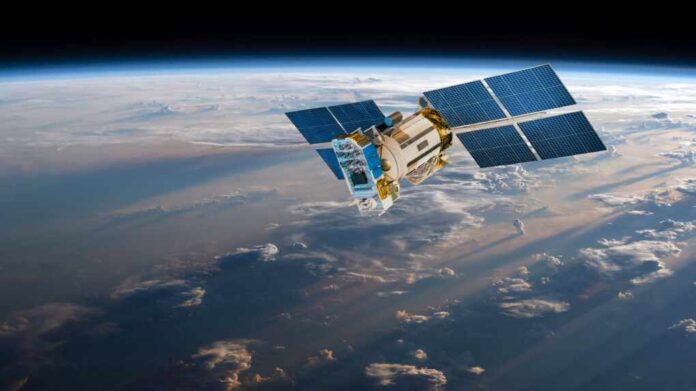
The Pentagon just locked in $1.75 billion for 36 new Golden Dome missile-tracking satellites, quietly expanding a space shield that could decide whether America survives the next missile attack.
Story Snapshot
- The Space Development Agency awarded $1.75 billion for 36 new Golden Dome tracking satellites in low Earth orbit.
- L3Harris and Sierra Space will each build 18 satellites, with launches targeted around 2028.
- The satellites are part of Tranche 3, meant to track hypersonic and ballistic missiles before they reach U.S. soil.
- Golden Dome costs already run into the tens of billions, with long-term estimates reaching into the trillions.
New Contracts Push Golden Dome Space Shield Forward
The Space Development Agency, under the United States Space Force, has awarded about $1.75 billion to build 36 missile tracking satellites for President Donald Trump’s Golden Dome defense shield. L3Harris Technologies and Sierra Space will each deliver 18 satellites, forming part of Tranche 3 of the agency’s missile warning and tracking layer in low Earth orbit. These spacecraft are designed to spot hostile launches quickly, giving commanders precious minutes to respond to threats that could devastate American cities.
The new satellites are planned to be ready in time for potential launches near the end of 2028. This timeline fits the Space Development Agency’s “spiral” approach, where new batches of satellites go up every few years to keep pace with fast-moving technology and growing foreign threats. Golden Dome’s tracking constellations aim to handle advanced hypersonic glide vehicles and maneuvering cruise missiles, which can dodge older ground-based radar and punch through legacy defenses that were built before these new weapons existed.
How Tranche 3 Fits Into the Growing Missile Tracking Network
The 36 new Golden Dome satellites will plug into a broader tracking network that the Space Development Agency has been building in stages since 2022. Earlier Tranche 1 contracts funded 28 satellites split between L3Harris and Northrop Grumman, focused on detecting infrared signatures from missile launches and feeding data into a military space internet. In Tranche 2, the agency expanded to 54 satellites with infrared sensors able to track hypersonic missiles through their entire flight path, using three different companies to spread risk and bring in competing designs.
Golden Dome’s Tranche 3 layer, which includes the new $1.75 billion award, sits alongside a larger $3.5 billion set of contracts for 72 missile warning and tracking satellites awarded in late 2025. Lockheed Martin, Northrop Grumman, L3Harris, and Rocket Lab are each building 18 satellites for that effort, with first launches targeted for fiscal year 2029. Together, these constellations create overlapping coverage around the globe, so no missile launch from Russia, China, Iran, or any rogue actor goes unseen. For a homeland defense shield, that early warning is the difference between life and death.
Price Tag, Risk, and What It Means for Taxpayers
While this $1.75 billion award is a big step, it is only one slice of Golden Dome’s cost. Congress has already appropriated more than $38 billion for Golden Dome-related space programs in the past two budget cycles alone. Independent estimates for the full shield, including interceptors and decades of operations, range widely, with some projections reaching as high as $1.2 trillion over 20 years or even more depending on the final architecture. For taxpayers worried about endless Washington spending, these numbers demand close attention and tough oversight.
Golden Dome also arrives after decades of mixed results from past missile defense efforts. Ground-based systems burned through tens of billions of dollars without proving they can reliably stop a real-world attack. Critics warn that space-based defenses can suffer the same fate if they are rushed, under-tested, or managed with weak accountability. Supporters counter that the United States cannot afford to sit still while hostile regimes perfect hypersonic weapons designed to bypass every older shield we have. They argue that a robust Golden Dome, if done right, protects millions of American families and deters enemies from ever launching.
Strategic Stakes for Homeland Security and Conservative Priorities
Golden Dome’s expanding satellite layers speak directly to core conservative concerns about national survival and constitutional government. A successful space shield would make it much harder for foreign powers to blackmail the United States with nuclear threats, preserving our ability to defend borders, enforce immigration laws, and resist globalist pressure. The more clearly Washington can see hostile missiles, the less likely it is to bow to international bullies who hope to use fear to force open-border policies or limit America’s right to defend itself.
This is how I see it. Not a merger but a coordination.
Trump launched the “Golden Dome” (formerly Iron Dome for America) initiative via executive order in January 2025 to build a comprehensive U.S. missile defense shield against ballistic, hypersonic, and cruise missiles,…
— Debra1776 (@debra727leo) July 14, 2026
At the same time, Golden Dome’s massive budgets and complex contracts demand vigilance from citizens and lawmakers. Patriots who care about limited government want strong defenses, not blank checks. The fixed-price structure of many Space Development Agency agreements is meant to cap costs and push companies to deliver on time and on budget. Whether that promise holds over the long haul will depend on steady oversight from Congress and continued pressure from informed voters who insist that every dollar spent on Golden Dome truly strengthens America’s shield, rather than feeding waste or corporate favoritism.
Sources:
realcleardefense.com, sda.mil, investing.com, morningstar.com, fedsavvystrategies.com, defensescoop.com, instagram.com, ucs.org, heritage.org