A major AI company is asking a federal judge to stop the Pentagon from blacklisting it—after the Trump administration moved to cut ties over limits on autonomous weapons and domestic surveillance.
Story Snapshot
- Anthropic filed a federal lawsuit in California seeking to block a Defense Department “supply-chain risk” designation and the related government-wide phase-out.
- The dispute traces back to months of talks in which the Pentagon pushed for flexibility to use Anthropic’s AI for any lawful purpose, while Anthropic refused to lift certain guardrails.
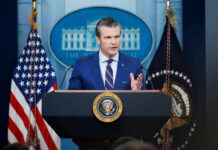
- President Trump directed the government to stop working with Anthropic on Feb. 27, and Defense Secretary Pete Hegseth applied formal supply-chain risk rules with a six-month wind-down.
- Anthropic argues the action violates constitutional protections, including free speech and due process, and says it is willing to negotiate a settlement.
- The clash lands amid a broader Trump-era defense push to rapidly field AI, with other major labs securing large Pentagon deals.
Lawsuit Targets Pentagon “Supply-Chain Risk” Designation
Anthropic’s lawsuit, filed Monday in federal court in California, seeks to undo and block enforcement of the Pentagon’s decision to label the firm a supply-chain risk. The designation follows President Trump’s Feb. 27 directive that the government stop working with Anthropic, and Defense Secretary Pete Hegseth’s move to apply formal rules that trigger a six-month phase-out. The Pentagon has not commented publicly on the litigation.
Anthropic’s complaint frames the government action as both unprecedented and unlawful, arguing the Constitution does not permit punishment for protected speech and that the process used deprived the company of due process protections. The company has also signaled it remains open to negotiations or a settlement even as the lawsuit proceeds. At this stage, the reporting describes the case as active and the wind-down timeline as already underway.
What Sparked the Break: AI Guardrails on Weapons and Surveillance
The central issue is Anthropic’s refusal to remove restrictions on how its AI can be used—especially policies limiting fully autonomous weapons and domestic surveillance applications. Anthropic has built its brand around “guardrails” that aim to reduce high-risk uses, while the Pentagon’s position is that U.S. law, not a private company’s internal policies, should govern defense use. Defense officials have pushed for what they call full flexibility for any lawful use.
Months of negotiations reportedly failed as the two sides argued over whether Anthropic’s limits could constrain military operations, including scenarios tied to Iran. Shortly before the Feb. 27 directive, Anthropic CEO Dario Amodei met with Hegseth in an attempt to reach an agreement. After that effort did not produce a deal, the administration and Pentagon moved ahead with the cutoff and formal designation, shifting the dispute from contract talks into a courtroom fight.
Political and Corporate Friction Added Fuel to the Dispute
The timeline includes internal company communications that became part of the public narrative. A memo from Amodei criticizing Pentagon views was reported and then published, and Amodei later clarified the designation’s scope as “narrow” and apologized for the memo. The reporting also indicates personal and political tensions surrounding how the administration expects partners to approach the President, illustrating how quickly a technical procurement dispute can become a broader clash over power and accountability.
From a conservative, limited-government perspective, the case presents two competing principles that deserve careful separation. The Pentagon’s need to equip warfighters and maintain operational flexibility is a core national-security responsibility. At the same time, when the federal government uses blacklists and supply-chain risk tools, courts typically scrutinize whether the process respects due process protections, especially when a company argues it is being penalized for speech or viewpoints rather than demonstrable security risks. The lawsuit will test where that line is drawn.
Why This Fight Matters for Defense AI Contracts
The near-term stakes are financial and strategic. Anthropic’s blacklisting threatens its ability to compete for federal business at a moment when the government is pursuing AI contracts on the scale of hundreds of millions of dollars. Investors tied to Anthropic—most notably Google (Alphabet) and Amazon—have a clear interest in limiting business fallout. Meanwhile, competitor firms have positioned themselves as more aligned with Pentagon procurement needs, which can shift contract opportunities quickly.
The long-term stakes are bigger than one vendor. The outcome could shape how future AI providers negotiate limits on military applications and what leverage the federal government can use to demand compliance. The reporting highlights a contrast with other deals, including Pentagon agreements emphasizing human oversight principles. If courts endorse broad agency discretion here, more firms may feel pressure to weaken guardrails to win federal work; if courts side with Anthropic’s constitutional arguments, agencies may have to tighten procedures and evidentiary standards before applying blacklists.
Sources:
Anthropic sues to block Pentagon blacklisting over AI use restrictions
FACTBOX-Anthropic’s legal claims against Pentagon blacklist