King Charles III became the first British king in history to address the United States Congress, delivering a speech that unexpectedly united feuding Republicans and Democrats in a rare moment of bipartisan appreciation.
Story Highlights
- King Charles III made history as the first British king to address a joint session of Congress, commemorating America’s 250th independence anniversary
- Senator Lindsey Graham praised the speech for uniting Republicans and Democrats, calling it a “much-needed morale boost” for a divided Congress
- The visit included a White House state dinner hosted by President Trump, reinforcing the special relationship between the United States and United Kingdom
- Only the second British monarch ever to address Congress since Queen Elizabeth II in 1991, marking a historic diplomatic milestone
Historic Address Unites Divided Congress
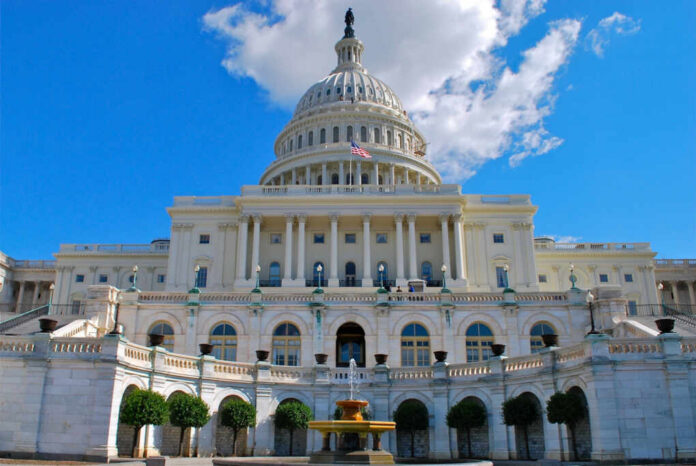
King Charles III addressed a joint session of Congress on April 28, 2026, becoming the first British king ever to do so. The speech commemorated the 250th anniversary of American independence and the Declaration of Independence. Senator Lindsey Graham, one of President Trump’s closest allies, praised the address as combining “wit, honour, history and appreciation.” Remarkably, Graham noted the speech united Republicans and Democrats, providing Congress with what he described as a “much-needed morale boost” at a time when partisan divisions typically dominate Capitol Hill.
The King’s address marked only the second time a British monarch has addressed Congress, following Queen Elizabeth II’s 1991 speech. During his remarks, King Charles invoked Charles Dickens’ phrase “a tale of two Georges” to reference the period when the two nations diverged. He also mentioned a gift from the United States to the United Kingdom symbolizing “shared resolve in support of liberty and in memory of President John F. Kennedy.” According to a Palace statement, King Charles was “greatly touched” by the warm Congressional response and “deeply honoured” to have been invited to deliver the historic address.
White House Ceremonial Welcome and State Dinner
President Trump hosted a ceremonial welcome at the White House before the Congressional address, with a state dinner scheduled for April 29, 2026. Trump remarked that King Charles would deliver “a speech that’s going to make everybody very envious of that beautiful accent of yours.” The visit represents King Charles’s 20th trip to the United States overall but his first as monarch and head of the Commonwealth. Queen Camilla accompanied him throughout the official state visit, participating in the formal ceremonies and diplomatic engagements with American officials and the Trump administration.
The timing of the visit holds symbolic importance, occurring during America’s semiquincentennial year marking 250 years since independence from British rule in 1776. This commemorative context underscores the transformation of the relationship between the two nations from colonial conflict to what both countries describe as a “special relationship.” The King’s address served as a platform for expressing “the highest regard and friendship of the British people to the people of the United States,” reinforcing diplomatic ties that span decades of cooperation across economic, military, and cultural spheres despite their revolutionary separation.
Rare Diplomatic Achievement Amid Political Gridlock
The bipartisan reception of King Charles’s speech stands in sharp contrast to the typical partisan warfare that characterizes modern Congressional operations. At a time when Americans across the political spectrum increasingly believe their government is failing them, this moment of unity highlights how international diplomacy can temporarily transcend domestic political divisions. However, the fact that a foreign monarch’s speech is required to achieve Congressional harmony raises questions about whether elected officials prioritize ceremony over addressing the tough economic and social problems facing ordinary Americans struggling to achieve prosperity through hard work and determination.
The visit establishes a historic precedent for King Charles III’s reign while reinforcing continuity in British-American relations across generations of leadership. The ceremonial grandeur and positive media coverage demonstrate how diplomatic pageantry still holds value in international relations, even as many Americans question whether such events translate into tangible benefits for working families facing inflation, immigration concerns, and government spending issues. The King’s successful navigation of American political sensitivities suggests skilled diplomacy can still bridge divides, though whether Congress will apply similar unity to solving domestic challenges remains an open question for frustrated citizens watching from outside the Washington establishment.