
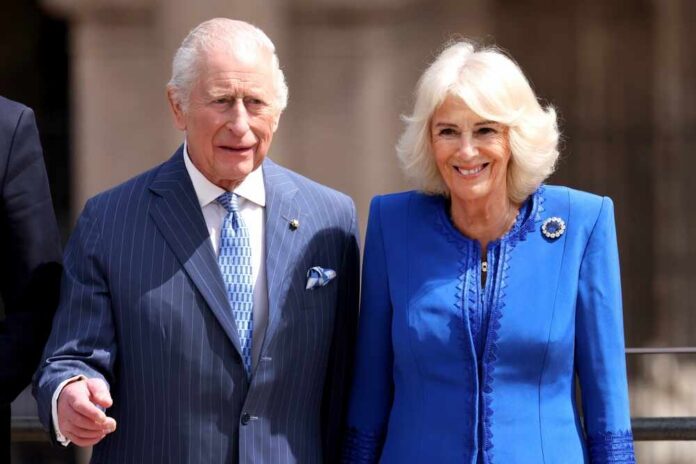
President Trump hosted King Charles III and Queen Camilla at the White House for a ceremonial farewell on April 30, 2026, marking the first state visit of his second term while showcasing a diplomatic relationship that Washington elites claimed would be contentious.
Story Snapshot
- Four-day state visit concluded with formal White House farewell ceremony attended by President and First Lady Trump
- King Charles addressed Congress and attended state dinner during first U.S. state visit as monarch
- Visit commemorated 250 years of U.S.-UK shared heritage and strengthened “special relationship”
- Media observers noted unexpectedly warm Trump-Charles rapport, defying predictions of tension
Historic State Visit Caps Trump’s Diplomatic Reset
President Donald Trump and First Lady Melania Trump hosted King Charles III and Queen Camilla for a formal farewell ceremony at the White House South Portico on Thursday morning, April 30, 2026. The event concluded a four-day state visit that included a Congressional address, a state dinner in the East Room, and ceremonial military honors. This marked King Charles’s first U.S. state visit as monarch and the first such visit of Trump’s second presidential term, deliberately scheduled to honor 250 years of American-British shared heritage and mutual values.
The state visit began April 27 with an arrival ceremony at the White House South Portico, followed by tea in the Green Room and a unique tour of the White House Beehive led by the First Lady. On April 28, King Charles delivered an address to Congress before attending the state dinner. The farewell ceremony took place in both the South Portico and Diplomatic Reception Room before the royal couple departed for final engagements at Arlington National Cemetery and Joint Base Andrews, demonstrating the administration’s commitment to traditional diplomatic protocol.
Warm Relationship Contradicts Washington Establishment Narrative
Media coverage consistently described the Trump-Charles dynamic as “very warm,” directly contradicting establishment predictions of diplomatic friction. White House officials and live broadcast observers noted the genuine rapport between the two leaders throughout the visit’s ceremonial events. This positive relationship marks a departure from previous administrations’ occasionally strained interactions with British royalty and reinforces Trump’s ability to maintain strong foreign relationships despite opposition criticism. The cordial tone suggests both leaders prioritized national interests over political posturing, a refreshing change for Americans tired of manufactured controversies.
The visit’s protocol elements included U.S. Army Herald Trumpets, full military honors, and carefully coordinated schedules managed by the White House Office of Protocol and the First Lady’s office. Previous precedents included King Charles’s 2022 U.S. trips as Prince of Wales and Trump’s first-term hosting of royals William and Kate in 2019. Unlike some past U.S.-UK diplomatic engagements marked by policy disagreements, this visit proceeded without reported tensions, focusing instead on shared security and economic interests that benefit American workers and businesses through strengthened transatlantic trade and defense cooperation.
Symbolic Diplomacy Reinforces Strategic Alliance
The state visit reinforced the U.S.-UK “special relationship” at a time when both nations face global challenges requiring coordinated responses. For Trump’s administration, the visit provided an opportunity to demonstrate foreign policy continuity and America’s continued leadership on the world stage. The ceremonial aspects honored longstanding traditions dating to 18th-century diplomatic customs while positioning the relationship for modern security and economic cooperation. This approach resonates with Americans who value practical alliances over globalist institutions that often prioritize international bureaucracy over national sovereignty.
The visit’s impact extends beyond immediate diplomatic optics. Defense and trade sectors benefit from strengthened bilateral cooperation, while the positive royal visibility may boost tourism and cultural exchanges. For veterans honored during the Arlington visit and diplomatic circles on both sides of the Atlantic, the successful state visit affirmed that traditional statecraft still matters. The event demonstrated that respect for ceremony and mutual interests can produce tangible results, contrasting with the transactional skepticism many Americans hold toward establishment foreign policy. This successful diplomatic engagement shows that putting America first doesn’t mean isolating America from valuable partnerships with nations sharing our founding principles of liberty and self-governance.
Sources:
President Trump and the First Lady Greet King Charles III and Queen Camilla at the White House