
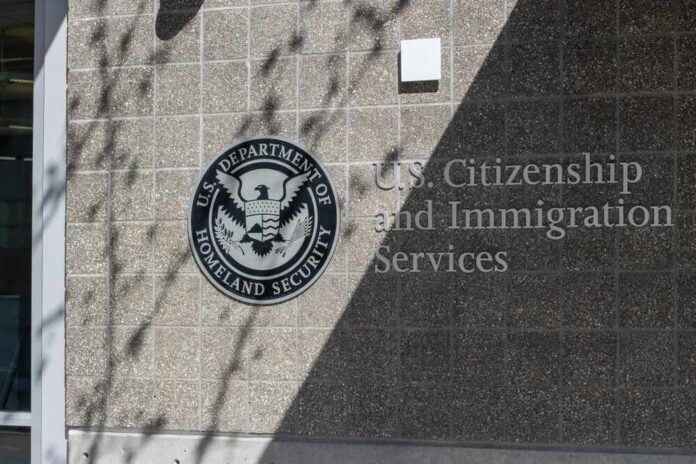
A new Trump-era plan to hike citizenship fees by $570 and scrap most discounts is forcing Americans to ask a tough question: are we paying for a secure, lawful system—or quietly importing the left’s broken, bureaucratic one?
Story Snapshot
- The naturalization fee would jump hundreds of dollars for law-abiding green card holders while waivers vanish for most low-income applicants.
- Homeland Security says higher fees are needed to fully fund tougher vetting and processing of citizenship cases.
- Democrats and advocacy groups claim the hike is a “wealth test” that will price many immigrants out of citizenship.
- The fight highlights a bigger problem: a fee-funded immigration agency squeezed by years of Washington overspending and neglect.
What the new Trump citizenship fee plan actually does
The new proposal from United States Citizenship and Immigration Services, under the Trump administration, would raise the basic citizenship application fee by about $570 for most green card holders who want to become Americans.[2] Paper filings would climb from $760 to $1,330, while online filings would jump from $710 to $1,280.[2] The same rule would sharply raise the cost to appeal a denied citizenship case, adding another $645 to request that the agency reconsider its own decision.[2]
The rule goes beyond simple price hikes and reshapes who gets help with costs. The plan would eliminate fee waivers and the reduced-fee option for most low-income citizenship applicants whose income is at or below four times the federal poverty level.[2] Exemptions would remain only for service members, keeping a special break for those who wore the uniform.[2] Supporters say this ends a system where some lawful applicants carried extra costs so others could pay less.
Why the administration says these higher fees are needed
Homeland Security officials argue that citizenship and other immigration benefits must, by law, pay for themselves through user fees.[4] The agency says current fees no longer cover the full cost of handling applications, especially as officers spend more time on fraud checks and extra security reviews.[4] A related 2019 fee rule proposed a weighted average increase of about 21 percent across immigration forms, warning that without changes the agency would face a yearly shortfall of roughly $1.3 billion.[4]
In the new citizenship rule, the department is blunt about its shift in philosophy.[2] Past administrations kept the naturalization fee below its true processing cost to “encourage naturalization” and integration.[5] The Trump team now says citizenship should not be subsidized at the expense of other legal immigrants who are also paying fees.[2] For many conservatives, that argument tracks with basic fairness: every benefit should be paid for by those who use it, not quietly shifted onto someone else’s bill.
Critics warn of a ‘wealth test’ on the path to citizenship
Progressive members of Congress and advocacy groups frame the fee spike as an intentional barrier, not simple cost recovery. A coalition of more than 80 Democrats in the House blasted the earlier $640 to $1,170 increase as “exorbitant,” saying it would place naturalization “out of reach” for immigrants who are eligible but live paycheck to paycheck.[6] Advocacy groups similarly warn that higher fees, stacked on top of rent, food, and health care, will stop many families from ever filing the form.[3]
Some organizations call the plan a “wealth tax on becoming a U.S. citizen” and argue it creates a de facto wealth test, since waivers and reduced fees would largely disappear.[8] They point to past data showing large citizenship spikes whenever a fee hike loomed, suggesting many lawful residents rush to apply before the price goes up.[18] To them, that is proof that cost, not love of country, often decides who can complete the last step toward full membership in American life.
How this fight fits a long pattern of broken immigration funding
This clash is not happening in a vacuum. For decades, Washington has pushed almost the entire cost of legal immigration onto users rather than funding the system through regular tax dollars.[23] A past fee schedule in 2007 raised average immigration fees by 88 percent and eliminated many waivers, leaving more than 99 percent of the agency’s budget funded by applicants themselves.[23] Each time fees go up, the same fight returns over cost recovery versus access to the legal path.
NEW: @USCIS is proposing to increase the cost to green card holders of becoming a U.S. citizen by $570, and wants to eliminate existing fee waivers for certain low-income immigrants.
The Trump admin says it no longer believes in encouraging naturalization with low-cost options. pic.twitter.com/e72C1DFGJm
— Aaron Reichlin-Melnick (@ReichlinMelnick) June 22, 2026
Conservatives see a deeper issue: when Congress overspends, ducks hard choices, and refuses to secure the border, law-abiding people end up paying more to follow the rules. Legal immigrants who want to take the oath are being asked to plug budget holes, fund better technology, and even offset money moved to enforcement.[5][13] That mirrors what many readers already face with the Internal Revenue Service, energy bills, and inflation—government mismanagement that lands hardest on responsible families instead of fixing the root problems.
Sources:
[2] Web – Trump Administration Proposes Increased Immigration Fees
[3] Web – USCIS issues final rule increasing fees
[4] Web – USCIS Finalizes Increase in Fees for Immigration-Related Applications
[5] Web – New USCIS Fee Increase: Understanding the Changes
[6] Web – Explainer | Trump and Congress’s Punishing New Immigration Fees
[8] Web – GARCÍA, MENG, JAYAPAL, AND TORRES CALL ON TRUMP …
[13] Web – USCIS Fee Increases Devalue and Attack the Naturalization Process
[18] Web – U.S. Citizenship Application Costs Are Increasing – Ankeny Law
[23] Web – [PDF] Final-Fee-Increases-HR1.pdf – National Immigration Project