President Trump declared an “energy ceasefire” in the Russia-Ukraine war tied to specific diesel releases, testing whether targeted pressure can shield civilian power and cut costs at home.
Story Highlights
- Trump announced a Russia-Ukraine “energy ceasefire” focused on protecting infrastructure.
- The White House linked the move to staged Russian diesel releases measured in tons.
- Reports said sanctions on Russian diesel were paused to enable deliveries.
- Ukraine and media reports questioned confirmation and cited ongoing strikes after the claim.
What Trump Announced And Why It Matters
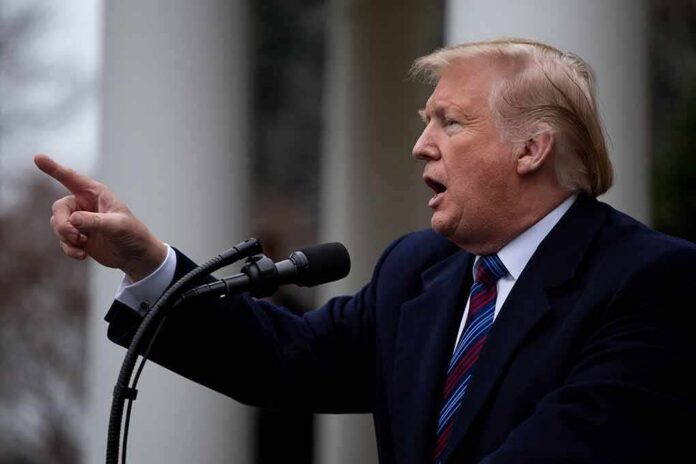
President Trump said Russia and Ukraine agreed to an “energy ceasefire,” warning both sides not to break it. He tied the move to a diesel plan with set quantities and timing. Reports said the first release would be 300,000 tons, then 500,000 tons in November, then 1 million tons, with a possible 3 million more depending on refinery output. The framing aims to protect power plants and fuel sites while testing real-world restraint over a short, defined period.
The administration’s case is simple: limit blows to energy sites that keep lights on and homes heated, and trade measured economic relief for measurable calm. Reporting said the Treasury Department paused sanctions on Russian diesel to make deliveries possible, pairing carrots with clear expectations. For many readers who pay more at the pump and fear winter blackouts, a narrow truce that guards civilian energy and nudges prices lower sounds like common sense if it holds.
Early Pushback And Confusion On The Ground
Right after the announcement, coverage cited a Russian strike on a power plant, raising doubts about the claim that a halt had begun. Public details were thin. The announcement did not spell out which facilities were covered, how compliance would be verified, how long the pause would last, or what penalties would follow violations. That gap left room for rivals and reporters to frame events before facts could catch up, a risk in any wartime test where timing and targets matter.
Ukraine’s leaders and public broadcasters did not confirm the deal when Trump posted it. Ukraine disputed the claim and pointed to continued missile and drone strikes after the message, and reporting said neither side formally confirmed the ceasefire at that time. When a truce hinges on specific sites, verification is everything. Without a written scope, a start time, and a neutral way to log strikes, one attack can cloud the whole effort and feed a media narrative of failure even if talks continue.
The Diesel Piece: Measured Incentives, Modest Price Impact
Analysts told reporters the first 300,000 tons were not likely to move United States prices by much on their own, which critics used to question the trade-off. Supporters counter that energy markets price signals over time, and that steady, larger flows matter more than a single tranche. The plan’s design—quantities that scale if conditions hold—fits a “trust, but verify” path many conservatives prefer: tie benefits to behavior, not promises. But the legal basis and terms for the sanctions pause need daylight and clear limits.
Congressional pushback is already forming, with critics saying any sanctions relief rewards Moscow during war. The White House can answer that by publishing the scope, start time, and enforcement triggers. If Russia hits covered sites, benefits stop. If strikes fall, fuel flows rise. Many readers remember years of vague “process” talk from globalists that led nowhere. This test is different only if it is specific, short, and judged by facts on the ground, not by press releases.
How To Judge Success In The Next 30 Days
Success demands clear metrics: days without attacks on named refineries, pipelines, storage depots, power stations, nuclear sites, and dams; confirmed diesel tonnage delivered on time; and faster repairs where power was hit before. If both sides hold fire on energy facilities for the stated window, that saves lives and keeps heat on. If they do not, the United States should snap back sanctions and end the lane. Skeptics will watch prices and strike logs; so should the administration, in public view.
For conservatives, the principle is peace through strength and accountability. Protect families from blackouts. Stop wasteful, open-ended spending. Demand results. Publish the terms, post the strike data, and enforce red lines. Trump set a marker with a narrow ceasefire and a fuel incentive. Now the burden is on Russia to comply and on Washington to verify. If it works, energy stays online and costs ease. If it fails, turn off the spigot and double the pressure, fast.
Sources:
cbsnews.com, investinglive.com, cnbc.com, bbc.com, yahoo.com, newsweek.com