
When a would-be president gets “Zoolander” questions instead of accountability, Americans learn exactly how the legacy press tries to rebrand progressive leadership.
Quick Take
- Katie Couric’s podcast interview with California Gov. Gavin Newsom fixated on his looks and “authenticity,” not policy.
- Conservative commentators, led by Adam Carolla, mocked the exchange as flattering media treatment that shields Democrats from tough scrutiny.
- The viral blowback played out largely on X, reinforcing public distrust of legacy media gatekeeping.
- Newsom’s growing 2028 chatter makes every soft interview—and every dodge—more politically consequential.
Couric’s “handsome” question becomes the headline
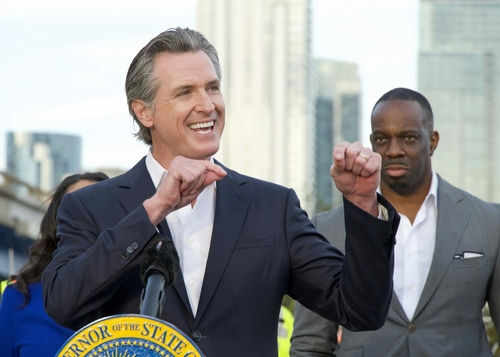
Katie Couric’s podcast Next Question put Gov. Gavin Newsom on the couch for a conversation that quickly veered into image management. Couric asked whether Newsom’s good looks create a “Zoolander problem” that could undermine perceptions of authenticity as Democrats size him up for a possible 2028 run. Newsom responded with laughter and insisted he is authentic, while critics argued the exchange sounded more like promotion than journalism.
Coverage of the moment framed it as a social-media-driven dustup, but the underlying issue is familiar: the question wasn’t “What did you do?” but “How do you come off?” The sources describe the segment as part personality-profile, part campaign-style positioning, with a Vogue description of Newsom as “embarrassingly handsome” helping set the tone. The interview’s focus on charm and presentation is exactly what frustrated voters point to when they say elites don’t live with the consequences of one-party governance.
Carolla and other critics say the press is running interference
Adam Carolla amplified the backlash by calling the interview a “tongue-bathing,” and by comparing Newsom’s vibe to Hunter Biden—“Confident, tone deaf and dumb,” in his words. Other conservative voices cited in the reporting argued Couric’s approach illustrated a double standard: friendly, image-forward conversations for prominent Democrats while Republicans get prosecutorial interviews. The criticism was less about a single “handsome” line and more about what it signaled: protected political celebrity.
Several commentators used the episode to argue that “authenticity” questions can become a convenient substitute for policy accountability. The reporting notes that one critic conceded Newsom’s attractiveness while still insisting his record should be the focus. That distinction matters because it draws a line between humor and scrutiny: the joke isn’t that a politician is handsome; the concern is that media time gets spent polishing a brand rather than testing claims, decisions, and outcomes that affect working families.
Newsom’s national ambitions collide with California’s governance record
Newsom has served as California’s governor since 2019, and the sources describe him as a leading Democratic presidential hopeful for 2028. That rising profile is why even a lighthearted podcast clip became a political Rorschach test. To supporters, it was a playful exchange about image. To critics, it was another example of a carefully managed ascent where national attention comes packaged with soft lighting, sympathetic interviewers, and cultural-magazine validation rather than sustained questioning about state-level results.
The available research also highlights how long-running disputes over California management feed into the skepticism. Fox News referenced Carolla’s earlier criticism—alongside Joe Rogan—about wildfire preparedness following the January 2025 Palisades Fire, emphasizing arguments about brush clearing and reservoir capacity. Newsom’s office, according to that reporting, pushed back and called some of those claims “factually inaccurate.” Even so, the larger point remains visible in the political optics: critics say Newsom gets image-centric media oxygen while policy debates get reduced to soundbites.
What this viral moment says about media trust heading into 2028
The sources agree the controversy has produced no formal consequences for Couric or Newsom; it’s a social media fight more than an institutional scandal. But these small moments accumulate, especially with a public that already suspects a protected class of politicians exists. When journalism blurs into celebrity treatment, it erodes trust in the press as a neutral referee—exactly the kind of institutional decay that leaves voters relying on podcasts and online clips to piece together what happened.
Podcaster Adam Corolla Calls Out Katie Couric After Her Tongue-Bathing ‘Interview’ With Gavin Newsom https://t.co/Ig0t9EO3CC
— Twitchy Updates (@Twitchy_Updates) March 11, 2026
Limited details in the research leave open basic questions such as the exact air date of Couric’s episode and whether the “Zoolander” moment was a brief aside or a central segment. Still, the documented reactions show why conservatives see a warning sign: political storytelling is being built around aesthetics and “vibes” while hard topics get backgrounded. For voters who care about constitutional limits and competent governance, that’s not just annoying—it’s a reminder to demand specifics, not packaging.
Sources:
MAGA Loses It Over TV Icon Katie Couric Asking Newsom if He’s Too Handsome
Katie Couric mocked for fawningly asking Gavin Newsom if he’s too handsome