A decade after Lockheed Martin promised a Mach 6 “Son of Blackbird,” the SR‑72 remains a mystery machine with no confirmed flights, missed deadlines, and a lot of unanswered questions for taxpayers and patriots.
Story Snapshot
- Lockheed Martin unveiled the SR‑72 hypersonic spy and strike concept in 2013 as a Mach 6 successor to the SR‑71.
- Public promises of a 2025 prototype flight and 2030 service have slipped, with no confirmed test flight as of 2026.
- The Pentagon and Air Force have never listed SR‑72 as a formal program, feeding doubt about funding and priorities.
- Delays fit a wider hypersonic pattern where big promises collide with technical problems, red tape, and budget games.
What We Know About The SR‑72 “Son of Blackbird” So Far
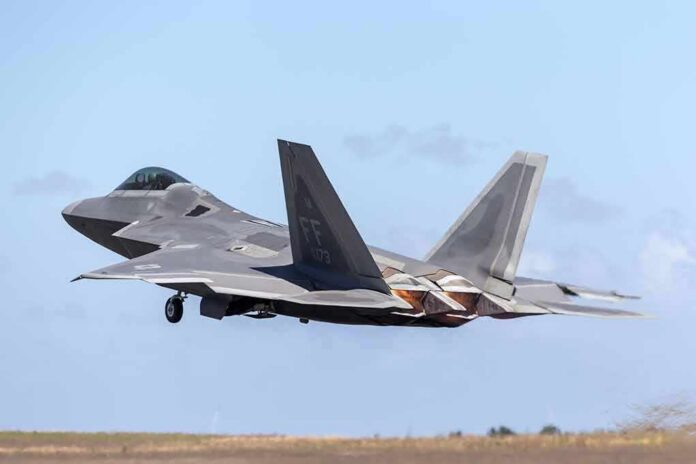
In 2013, Lockheed Martin publicly revealed the SR‑72 “Son of Blackbird,” pitched as an unmanned hypersonic aircraft that would take over where the legendary SR‑71 left off. The company described a drone built for intelligence, surveillance, and reconnaissance, with the ability to strike targets at extreme speed deep inside hostile airspace. Lockheed’s advanced Skunk Works division said the aircraft would reach about Mach 6, roughly twice as fast as the original Blackbird. Early media coverage reported an operational goal sometime in the 2030s.
Lockheed executives later added more detail and more confidence. In interviews and industry events, company leaders said they were working on a turbine‑based combined‑cycle engine that could get the aircraft off the runway and then shift into hypersonic mode. Aviation Week and other outlets reported that Lockheed’s goal was a reusable strike and spy drone that could be operational within about ten years if funding and technology lined up. By the late 2010s, officials were openly talking about a prototype flight research vehicle and suggesting it could fly by 2025.
Deadlines Missed, Silence From Washington, And Rising Skepticism
As of 2026, none of those public flight milestones have come true in the open. Reporting from defense site 19FortyFive notes that a first flight was “scheduled for 2025,” yet there has been no confirmed test, no rollout, and no government photo. Analysts there describe the SR‑72 today as a “Mach 6 question mark,” because either it has flown in deep secrecy or it has not flown at all, but in either case the public and Congress have been left in the dark. Simple Flying likewise reports “the aircraft is not yet known to have flown.”
The silence from the Pentagon is just as striking. 19FortyFive points out that the Department of Defense has never formally acknowledged an operational SR‑72 program, and the United States Air Force has never listed it among active or planned aircraft in budget documents. In 2018, a senior Lockheed executive even stated “unequivocally” that no SR‑72 had been built, cutting against years of speculation in the aerospace press. Since those comments, open information has been “extremely quiet,” with no official prototype announcement and no line‑item funding easily tied to SR‑72.
Why Hypersonic Programs Keep Slipping — And Why It Matters To Conservatives
The SR‑72 delay fits a wider pattern that should concern anyone who cares about strong defense and honest spending. Government watchdog reports on hypersonic weapons show repeated schedule slips, test failures, and supply chain problems across several programs, not just aircraft. One assessment notes that major hypersonic efforts are “mired” in testing bottlenecks and production issues, turning promised “rapid” programs into long, costly marathons. That same pattern appears here: bold public targets, followed by years of quiet reset.
For conservative readers, the core issue is not high technology itself but trust, priorities, and oversight. Taxpayers fund hypersonic research to keep America ahead of China and Russia, not to feed endless “concept” projects that never clearly mature. When a company announces a Mach 6 spy plane, hints at a 2025 flight, and a decade later there is still no confirmed test in the open record, it raises clear questions about how the Pentagon manages risk and rewards contractors. It also exposes how much of our most advanced work drifts into a black box where only a small circle sees the real progress.
Strategic Stakes: Hypersonics, Deterrence, And The Need For Adult Supervision
While SR‑72 remains in the shadows, rivals are racing ahead with their own hypersonic systems, and open sources show the United States struggling to field even its first deployable hypersonic weapon on time. A Bloomberg summary of congressional auditors describes that flagship weapon as already “at least two years late,” facing more delays over production troubles. Another analysis on American hypersonics argues that programs are stuck in a loop of “hype versus reality,” with deadlines slipping into the late 2020s or beyond. Every year lost narrows America’s edge and invites miscalculation by hostile regimes.
Lockheed Martin revealed the Mach 6 SR-72 concept in 2013.
More than a decade later, no complete prototype or flight has been publicly verified. Hollywood supplied the Darkstar. Secrecy supplied the rumors.
SR-72 — The Unconfirmed Son of Blackbird#SR72 #SR71 #SkunkWorks… pic.twitter.com/0Z0hUhEdfE
— daryl (@shortsbydaryl) July 14, 2026
For the Trump administration’s Pentagon leaders, the SR‑72 story is a warning label. They inherited a system where big talk under past presidents, especially during the Obama and Biden years, often outpaced delivery in advanced weapons. The mission now is to break that cycle: force clear milestones, demand real flight tests, and tie future hypersonic dollars to results, not glossy concepts. If SR‑72 is real and useful, it needs a visible path and real accountability. If it is not, those resources must move to systems that can actually fly, deter enemies, and defend the country.
Sources:
19fortyfive.com, sustainability-times.com, youtube.com, nationalinterest.org, patriotspostdaily.com, nationalsecurityjournal.org, bloomberg.com