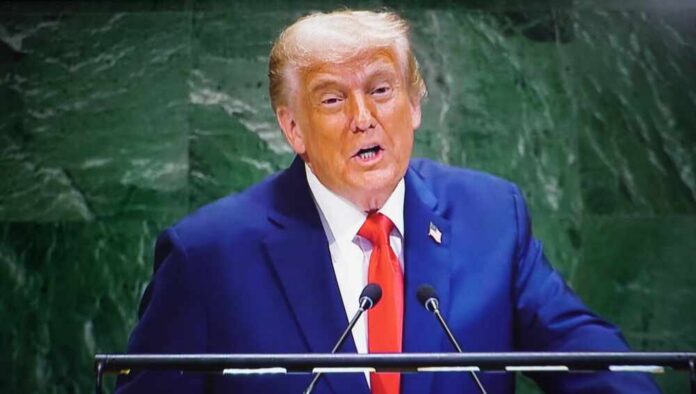
President Trump’s primetime election speech put America’s broken voting system — and the ruling class that denies it — under a white-hot spotlight.
Story Snapshot
- Trump declassifies intelligence he says proves massive foreign access to U.S. voter data and machine weaknesses.
- He claims China stole 220 million voter files and warns that electronic voting systems are ripe for hacking.
- He pushes a “Save America” agenda built on strict voter ID and tighter rules on mail-in and absentee ballots.
- Democrats and intelligence officials insist there is no proof foreign actors changed votes in 2020.
Trump Uses Primetime Platform To Sound Alarm On Elections
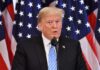
President Donald Trump used a rare primetime address from the White House to lay out what he called “shocking vulnerabilities” in America’s election system, tying those claims directly to his push for tougher voting laws ahead of the midterms. Speaking to millions of Americans, he framed the speech as a wake-up call after years of ignored warnings, saying the same broken system that hurt Republicans in 2018 and 2020 still threatens honest elections today. For many conservatives, his message echoed long-held fears about weak safeguards and elite denial.
Trump said he was ordering the immediate release of previously classified intelligence documents that show serious risks in how votes are managed and counted. He described the material as proof that core election systems, including voter databases and electronic voting machines, are exposed to foreign hacking and manipulation. The White House backed this move by launching a public website with selected documents tied to past elections, though reporters noted that the files were presented without full context or clear links to changed vote totals.
Claims Of Foreign Access To Voter Data And Machine Weakness
In the speech, Trump claimed that the People’s Republic of China carried out what he called the largest compromise of election data in history, gaining illicit access to about 220 million U.S. voter files over several years. He argued that this kind of mass data theft lets foreign powers track, target, and pressure American voters while helping them shape outcomes in close races. He also cited intelligence language about centralized voter databases and election websites being “most vulnerable to exploitation,” saying this proves the system is wide open to disruption.
Trump went further by warning that electronic voting machines and ballot counting systems “cannot honestly be defended” because of how exposed they are to hacking and tampering. He told viewers the newly released assessments show federal officials have long known these machines are at risk but kept the public in the dark. This fits years of conservative concern that complex, computerized systems make it easier to cheat and harder for regular citizens to verify results, especially when audits are weak or opaque. For many on the right, his blunt language matched their own doubts about machines that never seem to fail in Democrats’ favor.
Deep State Allegations And The Push For Stricter Voting Rules
Trump also accused unnamed “deep state” figures of hiding or soft-pedaling evidence of foreign election meddling, suggesting that powerful insiders preferred to protect the establishment rather than tell voters the truth. His critics say this continues a long-running pattern of blaming shadowy forces whenever he loses, but his supporters hear it as confirmation that bureaucrats and political appointees still put their own power above transparency and accountability. That anger feeds a broader populist demand to shrink the permanent government and return control to voters and elected officials.
From those claims, Trump argued for a “Save America” agenda rooted in strict voter ID, tighter rules on absentee and mail-in ballots, and cleaner voter rolls. He linked his policy push to years of conservative frustration with ballot harvesting, loose verification, and rushed pandemic-era changes that favored Democrats. He told viewers that without firm ID rules and strong chain-of-custody for ballots, foreign actors and domestic operatives can exploit the cracks in the system. These ideas resonate deeply with voters who believe basic safeguards, like showing photo ID and limiting mail ballots, are common sense, not “suppression.”
Intelligence Community And Democrats Push Back Hard
Top Democrats and intelligence officials quickly pushed back, saying Trump’s speech twisted selective pieces of the record without proving that any foreign actor changed actual votes. A declassified 2021 Intelligence Community Assessment stated there were “no indications that any foreign actor attempted to interfere in the 2020 U.S. elections by altering any technical aspect of the voting process,” including vote counts. A joint summary from the Department of Justice and Department of Homeland Security likewise said there was no evidence a foreign government blocked voting, changed votes, or disrupted tallying.
On July 16, 2026 (yesterday), President Trump delivered a primetime address from the White House on election security. In it, he:
• Publicly referenced intelligence claiming China illicitly acquired ~220 million U.S. voter files (names, addresses, phone numbers, political party…— American Girl (@BlueLadyDi) July 17, 2026
House Intelligence Committee Democrats warned that Trump was “weaponizing declassified intelligence” to justify a new push for restrictive voting laws, not to share neutral facts with the public. They said no fresh intelligence had been provided to them that contradicted those earlier findings, despite repeated requests, and accused the White House of cherry-picking language about vulnerabilities while ignoring clear statements that no votes were changed. Election observers and many media outlets framed the entire address as part of a broader campaign to sow mistrust in elections and keep doubts about Trump’s 2020 loss alive as the midterms approach.
Where That Leaves Concerned Constitutional Conservatives
For constitutional conservatives watching from home, two realities now collide. On one side, official reports insist that while foreign powers probe our systems, there is no hard proof that they changed votes in 2020. On the other side, Trump has exposed documents and warnings that suggest real technical weaknesses, massive foreign access to voter data, and deep resistance to full transparency from Washington insiders. Both can be true at once: the system may be deeply vulnerable, yet past elections may not have been flipped by foreign actors.
That tension matters for anyone who cares about the rule of law, honest elections, and limited government. Claims of fraud can erode trust if they are careless, but ignoring real vulnerabilities and blocking common-sense safeguards does the same. Conservatives can demand two things at once: proof and accountability for any alleged foreign meddling, and strong, simple protections like voter ID, secure paper ballots, and transparent audits. However the political fight plays out, guarding the integrity of the vote — and refusing to let elites dismiss everyday concerns — remains a core part of defending the Constitution.
Sources:
politico.com, reuters.com, npr.org, stylemagazine.com, dni.gov, intel.gov, int.nyt.com, gottheimer.house.gov, pmc.ncbi.nlm.nih.gov, eipartnership.net, brennancenter.org