
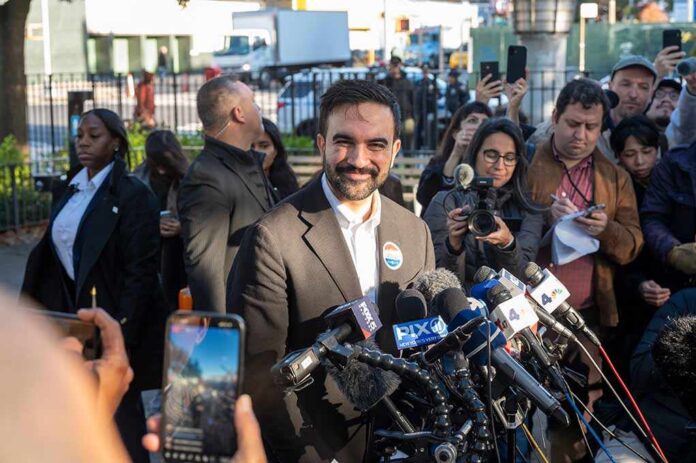
New York City’s socialist mayor just pushed the legal deadline to close Rikers Island back five years, betting that his administration can shrink the jail population by nearly 40 percent to make the numbers work.
Story Snapshot
- Mayor Zohran Mamdani released a plan to close Rikers Island by December 31, 2032, five years past the existing legal deadline of 2027.
- Four smaller borough-based jails in Brooklyn, Queens, the Bronx, and Manhattan will replace the island complex in stages through 2032.
- The plan depends on cutting the roughly 6,000-person jail population by nearly 38 percent before the final facility opens.
- Construction costs for the replacement jails have climbed from about $8.7 billion to roughly $16 billion.
- Former Mayor Eric Adams, a City Council Republican, and the correction officers’ union have all raised objections to the plan.
City Blows Past Its Own Legal Deadline
New York’s City Council voted back in 2019 to shut Rikers Island by August 31, 2027. Mamdani’s new plan throws that deadline out the window, pushing final closure to December 31, 2032 instead. The city says incarceration will end in stages, with Brooklyn’s jail finishing in 2029 and Queens, the Bronx, and Manhattan following between 2031 and 2032.
That five-year slip means the city needs its own legislation just to make the new timeline legal. Critics call that an admission that years of delay under past administrations, and now under Mamdani, have left the city unable to meet a promise it made to voters nearly a decade ago.
Plan Hinges On Nearly 40 Percent Fewer Inmates
Here’s the catch nobody can ignore. The four new jails are designed to hold about 4,100 to 4,500 people. Rikers currently houses roughly 6,000 to 6,700. That means the mayor’s entire closure plan depends on reducing the jail population by close to 38 percent before the last facility ever opens. City Hall has not released a dated plan showing how that drop actually happens.
The city’s own announcement points to reducing pretrial detention and speeding up slow court cases as the main tools for shrinking the population. But the research package provided here contains no month-by-month targets, no independent review, and no guarantee those reforms will work fast enough to hit the 2032 numbers.
Cost Nearly Doubles While Taxpayers Foot The Bill
Construction costs for the four replacement jails have jumped from roughly $8.7 billion to about $16 billion. City Journal argues that if the jail population ever exceeds what the new, smaller facilities can hold, the city faces an ugly choice: release serious violent offenders early or overcrowd the new jails, calling it “a dangerous and potentially unconstitutional solution”. On top of construction costs, the city has pledged $146 million next fiscal year for mental health care, substance-abuse treatment, and victim services tied to the plan.
Predecessor And Union Sound The Alarm
Former Mayor Eric Adams has publicly warned that shrinking the jail population risks putting more people accused of violent crimes back on city streets. He has also opposed federal oversight of the system and the borough-jail approach itself. The union representing correction officers has “consistently pushed to keep Rikers open,” according to reporting on the plan.
Republican City Councilman Frank Morano said he will fight any legislation extending the closure deadline. He argues the city should instead build modern jails on Rikers Island, which it already owns, rather than spend billions on four new sites that may not even have enough beds. Morano specifically flagged that the new facilities are designed for about 4,500 people while the jail population sits near 6,600.
Neighbors Push Back On New Jail Sites
Residents near the proposed Manhattan site have said their concerns were not heard during planning. Jan Lee, co-founder of Neighbors United Below Canal Street, has specifically opposed putting a new jail in Chinatown. Other public commentators have questioned the basic logic of the plan, with one pointed complaint summing up the skepticism: trading one jail for four smaller ones looks like “a lot of wasted tax dollars” to many New Yorkers watching the price climb.
What Comes Next
Mamdani’s administration still needs City Council approval to legally extend the 2027 deadline, and that fight is just beginning given Morano’s opposition. The plan’s success rests entirely on whether the city can actually cut its jail population by nearly 38 percent while building four jails on schedule. Taxpayers, families near the proposed sites, and the people currently locked up on Rikers are all waiting to see if the promise holds.
Sources:
youtube.com, nyc.gov, abc7chicago.com, criminaljustice.cityofnewyork.us, actionnews5.com, gothamist.com, pbs.org, corrections1.com, newsweek.com