A billion-dollar federal investment in mental health crisis centers is failing Americans in their darkest moments, with most 988 suicide prevention hotlines plagued by severe understaffing, dropped calls, and worker burnout despite skyrocketing demand.
Story Snapshot
- Most 988 crisis centers remain severely understaffed despite nearly $1 billion in federal investment since 2022 launch
- Call volumes surged 40% to over 12 million contacts annually, but thousands of desperate callers are abandoned monthly
- Worker turnover rates hit 30-60% across states due to crushing workloads of up to 95 calls per day and inadequate training
- Recent federal cuts under DOGE task force eliminated 10-25% of SAMHSA oversight staff, threatening to worsen the crisis
Broken Promise of Easy Access
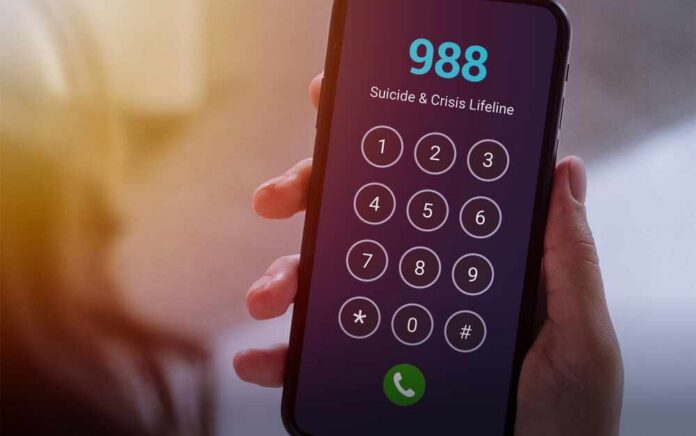
The 988 Suicide and Crisis Lifeline launched in July 2022 under the Biden administration as a streamlined replacement for the decade-old 10-digit National Suicide Prevention Lifeline. Congress had mandated the three-digit code in 2020 to provide easier access during a post-COVID mental health emergency that saw suicide attempts spike 30% in some demographics. The Substance Abuse and Mental Health Services Administration allocated approximately $1 billion through 2025 to support roughly 200 state and local call centers nationwide. Yet despite this massive investment, the system faces a staffing collapse that undermines its core mission of saving lives.
Overwhelming Demand Meets Insufficient Resources
Contact volume exploded from roughly 4 million annually under the old system to over 12 million by 2025, representing a 40% increase that caught administrators off guard. SAMHSA reports serving more than 7 million people, but frontline operators describe crushing workloads. In Texas alone, counselors handle an average of 95 calls per day across five centers with just 166 total staff, leading to an abandonment rate ranking fifth-worst nationally. The state’s alliance of crisis centers identifies a $7 million funding shortfall needed to meet demand adequately. Texas answers fewer than 85% of in-state calls, falling below Vibrant Emotional Health’s 90% standard, forcing thousands of desperate Texans to give up monthly while waiting for help.
Study finds most Biden-era 988 call centers understaffed amid growing demand @WashTimes https://t.co/Rbjx9cgFcZ
— Sean Salai (@SeanSalai) May 5, 2026
Burnout Drives Mass Worker Exodus
Crisis counselors face relentless pressure that fuels turnover rates unseen in most professions. Washington state saw counselor turnover jump from 19% to 30% between initial launch and 2025. Oklahoma exceeded 33% annual turnover, while Colorado lost 40-60% of new hires within their first year. Workers describe shifts expanding from 8 to 12 hours amid inadequate training for handling life-or-death situations. Jennifer Battle of Texas’s Harris Center told reporters her team is “doing way more” but desperately needs doubled resources. This exodus creates a vicious cycle where remaining staff shoulder even heavier burdens, accelerating further departures and leaving vulnerable callers stranded during mental health emergencies.
Federal Cuts Compound Existing Crisis
Just as the understaffing disaster reached critical mass, the Trump administration’s DOGE task force ordered sweeping federal efficiency cuts in 2025. SAMHSA lost 10-25% of its staff by early 2026, including communications personnel responsible for raising public awareness about 988 services. These cuts eliminate oversight capacity precisely when the struggling network needs stronger federal coordination and accountability. Bipartisan lawmakers have introduced legislation to prevent call centers from being offshored, recognizing that cost-cutting measures could further erode service quality. The timing exposes a fundamental failure: nearly $1 billion in taxpayer money produced a crisis system that cannot answer calls from citizens contemplating suicide, while bureaucratic reductions now threaten what limited infrastructure exists.
The 988 crisis reveals a pattern familiar to Americans across the political spectrum: government announces a solution, spends lavishly, yet delivers dysfunction when citizens need help most. Workers facing impossible conditions lack bargaining power against federal agencies prioritizing efficiency metrics over human needs. Meanwhile, vulnerable populations including rural communities and youth battling mental health crises bear the consequences of administrative incompetence. Los Angeles’s Didi Hirsch center handles 20,000 monthly calls, with CEO Lyn Morris emphasizing that 12 million contacts prove “people want help” in situations where “lives are at stake.” Until authorities address root causes—inadequate compensation, unrealistic workloads, and insufficient training—the billion-dollar lifeline will continue failing those it promised to save.
Sources:
Study finds most Biden-era 988 call centers understaffed amid growing demand – Washington Times
988 centers struggle to hire as burnout plagues some crisis staff – ABC News
Federal staffing cuts could impact 988 crisis call centers – Audacy
Thousands of Texans give up calling understaffed suicide hotline – Governing
Suicide prevention lifeline underfunding – CBS News
The concerns looming over the 988 mental health hotline – The 1A
988 mental health crisis services faltered since 2022 launch – STAT News
Bipartisan lawmakers aim to stop call centers going overseas – Washington Times