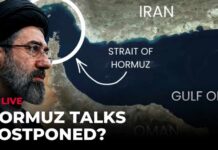
For the seventh night in a row, U.S. forces have struck Iranian military targets under President Trump’s orders, as Iran warns of a wider war.
Story Snapshot
- U.S. Central Command confirms seven straight nights of strikes on Iranian military infrastructure.
- Targets include ports, logistics hubs, weapons bunkers, and maritime assets tied to attacks on shipping.
- Trump-directed campaign aims to protect commercial vessels in the Strait of Hormuz and hold Iran accountable.
- Iran claims U.S. casualties and drone losses, while the Pentagon disputes those reports and stresses limited goals.
Seven Nights of Strikes Under Trump’s Command
U.S. Central Command says American forces have now hit Iran for seven consecutive nights, marking one of the most sustained strike waves of the war. The latest round began Friday evening and ended at 9:30 p.m. Eastern Time, with the military describing the mission as designed to “continue degrading Iranian military capabilities” at the Commander in Chief’s direction. Reports from multiple outlets note that the Pentagon has confirmed President Donald Trump ordered these operations, underscoring that this is a White House-backed campaign, not a rogue Pentagon push. For many conservative Americans, this raises a key question: can our forces hit back hard enough to stop Iran’s aggression while avoiding another endless war that drains our troops and tax dollars?
Central Command says the strikes used a mix of fighter aircraft, aerial drones, and warships, showing that the United States is leaning on air and naval power rather than ground troops. The command reports that recent attacks have hit “surveillance sites, military logistics infrastructure, underground weapons storage, and maritime capabilities,” all tied to Iran’s ability to target ships and move weapons around the region. These choices matter for readers worried about mission creep: using jets and ships lets America punish Iran’s military without sending large numbers of infantry into Iranian cities, which would risk heavy casualties and long-term occupation. At the same time, this level of firepower signals that the Trump administration wants Tehran to know there is a real price for attacking international shipping and U.S. positions.
Key Locations and the Fight for the Strait of Hormuz
Central Command and media reports list a string of Iranian locations hit over recent nights, including Jask, Sirik, Bushehr, Bandar Abbas, Qeshm Island, Ahvaz, and Yazd. Many of these are coastal or port areas that support Iranian naval forces and the Islamic Revolutionary Guard Corps, which has used boats, drones, and missiles to threaten commercial ships in the Strait of Hormuz. The Pentagon says earlier rounds of strikes hit about 140 Iranian military targets in a single night, including missile and drone sites, ammunition depots, communication networks, and coastal surveillance locations. For Americans who depend on stable energy prices and safe shipping lanes, this campaign is being sold as a way to keep Iran from holding the global oil trade hostage or using terror at sea to pressure the West.
Official statements stress that the main goal is to “degrade Iran’s ability to continue attacking international shipping flowing through the Strait of Hormuz.” That framing fits with long-standing conservative calls for strong defense of trade routes without endless nation-building. However, Iran has answered with its own missile and drone strikes on U.S. bases and allied territory in the Gulf, including attacks claimed against sites in Kuwait and Bahrain. This tit-for-tat raises the stakes: every strike meant to protect shipping risks fresh Iranian retaliation, which in turn forces U.S. commanders to decide how far they are willing to go to restore deterrence without pulling America into a larger regional ground war.
Competing Claims About Casualties and Nuclear Sites
Iranian state media and military spokesmen are pushing claims that U.S. troops have been killed or wounded in large numbers, and that an American MQ-9 Reaper drone was shot down near Iraq. Central Command has publicly rejected reports of recent U.S. troop deaths or captures, calling some of Tehran’s claims “lies” and a “false fact,” and insisting all forces remain fully mission-capable. So far, U.S. officials have not released detailed damage photos or base logs to back up those denials, leaving room for foreign outlets to repeat Iran’s stories and confuse the public. This kind of information war has marked U.S.–Iran clashes for decades, where Tehran inflates its success and Washington limits what it reveals for security reasons.
There is also a gap between some public rhetoric and quieter Pentagon assessments on nuclear targets. Defense Secretary Pete Hegseth has told the public that Iran’s “nuclear ambitions have been obliterated,” echoing a tough-on-Iran message many conservatives welcome. But internal intelligence reporting, cited in later coverage, says strikes on three nuclear sites did not penetrate deep enough to fully destroy the facilities or completely end Iran’s nuclear capabilities. That does not mean the attacks failed; it likely means they set the program back rather than wiping it out. Still, such mixed messaging can frustrate citizens who want plain talk from their leaders, especially when American lives and billions in defense spending are on the line.
Escalation Risks and What Patriots Are Watching For
Regional governments like Kuwait have reported damage to civilian infrastructure, including power and desalination plants, after Iranian counterstrikes. Those reports shift some media focus away from U.S. goals, and toward worries about humanitarian impact and broader instability. Commentators on major networks, including a retired general on Fox News, have described the current strikes as an “appetizer before the main course,” hinting at possible ground operations or “decapitation strikes” against Iran’s leadership. That language alarms foreign audiences and even some Americans who support hitting back but do not want another Iraq-style invasion that strains the military and the economy.
🚨 CrawlHub · Newswire · 12h Brief
Jul 18🇮🇷 🚨 Escalating Regional Conflict
Iran launched missile and drone attacks against US military installations in Kuwait, Bahrain, and Jordan, marking the 7th consecutive night of strikes. Kuwait reported injuries to military personnel and…— CrawlHub (@TheCrawlHub) July 18, 2026
For conservative readers, several key questions now define this story. First, can the Trump administration keep these strikes focused on real military threats—missiles, drones, naval assets—without sliding into open-ended regime-change campaigns that burn through money and risk wider war? Second, will Central Command release clearer after-action assessments so the public knows whether these strikes truly cut Iran’s capacity to threaten ships and bases, rather than just creating headlines? Third, will Washington stay honest about American casualties and nuclear progress, resisting both Iranian propaganda and any temptation to oversell success? The answers will determine whether this seven-night campaign stands as a justified defense of U.S. interests and global trade—or the start of a larger conflict that tests America’s strength, patience, and pocketbook.
Sources:
youtube.com, aljazeera.com, reuters.com, washingtonexaminer.com, abcnews.com, marketscreener.com, thehill.com, nytimes.com