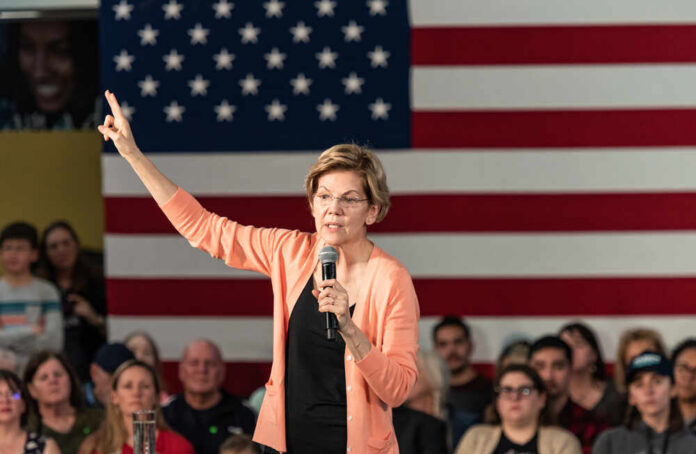
Representative Ro Khanna is selling Senator Elizabeth Warren’s “Ultra-Millionaire Tax” as a moral way to wipe out student debt, but the numbers, history, and fine print tell a very different story for taxpayers and the Constitution.
Story Snapshot
- Warren’s wealth tax would hit assets above $50 million every single year, not just income.
- Backers promise $6.2 trillion in new cash, but past wealth taxes have missed targets by huge margins.
- Ro Khanna calls it a “moral” path to cancel student debt, even though the bill does not earmark money for that.
- The plan depends on a massive Internal Revenue Service expansion, exit taxes, and aggressive asset tracking.
What Warren’s Ultra-Millionaire Tax Really Does
Senator Elizabeth Warren’s Ultra-Millionaire Tax Act would place an annual tax on net worth, not income, for the richest households in America. The proposal calls for a 2 percent yearly levy on wealth above $50 million and a 3 percent levy on wealth above $1 billion, directly targeting assets like homes, businesses, and investments instead of only taxing realized gains or income. Supporters say about 260,000 of the wealthiest households would be affected, roughly the top 0.15 percent of the country. That claim is used to reassure everyone else that they will never see this tax, but history shows that new federal taxes often grow over time.
Warren and her allies, including Representative Pramila Jayapal and Representative Brendan Boyle, argue that this small-sounding annual tax on the very rich would raise a huge amount of money. They cite University of California, Berkeley economists Emmanuel Saez and Gabriel Zucman, who estimate the tax would bring in about $6.2 trillion over ten years. Backers stress that this windfall would come “without raising taxes on 99.85 percent of households,” and they pair the proposal with a long wish list of new federal programs, including universal childcare, tuition-free community college, lower Medicare eligibility age, and more social spending. This is the backdrop for Ro Khanna’s claim that taxing “ultra-millionaires” is the moral way to cancel student debt.
Ro Khanna’s “Ultra-Moral” Debt Pitch vs. the Bill’s Fine Print
Representative Ro Khanna has championed aggressive wealth taxes before, such as the Sanders–Khanna plan, and now frames Warren’s updated proposal as an “ultra-moral” way to erase student debt for millions of borrowers. Warren herself has long tied wealth taxes to education relief, previously promoting a combination of her wealth tax and a student loan cancellation plan as part of a broader economic agenda. This political messaging is clear: soak the ultra-rich, cancel student loans, and call it justice. For many frustrated Americans who played by the rules, this sounds like the latest twist in the long story of Washington rewarding some and punishing others.
The problem is that the actual legislative text behind Warren’s 2026 Ultra-Millionaire Tax does not earmark revenue for student debt cancellation. Analyses of similar wealth-tax bills note that drafters openly state “revenue is not earmarked,” meaning the money would flow into general federal coffers, to be fought over in future spending bills. So while Ro Khanna can promise that this tax is the moral engine to cancel student loans, there is no binding mechanism in the law forcing Congress to use the money that way. Conservative readers will recognize this pattern: big moral claims at the microphone, blank checks in the statute.
The Enforcement Machine: Bigger IRS and a 40 Percent Exit Tax
To make the numbers work, Warren’s plan leans heavily on a massive enforcement buildup inside the federal government. The proposal includes an extra $100 billion for the Internal Revenue Service to create a dedicated wealth tax unit, boost audit rates on high-net-worth families, and police complex asset structures worldwide. It also features a 40 percent “exit tax” on the net worth above $50 million of any citizen who tries to renounce citizenship to escape the new levy. These measures reveal that even the bill’s authors expect serious resistance and creative avoidance from wealthy taxpayers.
Former Senator Heidi Heitkamp, a Democrat, has warned that this type of annual wealth tax closely resembles the old personal property taxes that many states abandoned because they were unpopular, hard to administer, and often challenged legally. She argued that valuing assets every year without realized gains is “legally questionable” under the current federal tax framework and could trigger a wave of court fights and capital flight. Even California’s Democratic Governor Gavin Newsom has opposed state-level wealth taxes due to fears of driving investors and jobs out of the state, which raises doubts about how a nationwide version would play out in practice. For conservatives who worry about bloated bureaucracy and weaponized tax agencies, the idea of pumping $100 billion into the Internal Revenue Service to go after unrealized wealth sets off alarms.
History, Overhyped Revenue, and the Risk to Growth
Supporters like Warren, Khanna, and Jayapal say this tax would finally make the “rigged economy” fair, arguing that billionaires pay lower rates than teachers and that corporate leaders are rewarded for replacing workers with automation and artificial intelligence instead of hiring Americans. But when you look at the track record of wealth taxes here and abroad, a different picture emerges. Past wealth taxes have regularly raised far less than promised once people move money, re-title assets, or leave high-tax zones. An analysis from the Cato Institute notes that wealth-tax revenue projections have often been off by 40 to 60 percent once real-world behavior kicks in. That pattern means Warren’s $6.2 trillion claim is likely very optimistic.
Khanna is referencing the 'Ultra-Millionaire Tax Act' also championed by Elizabeth Warren.
Here she is describing all of the great things the government could do by taxing wealth over $50M, including:
“Cancelling student loan debt." https://t.co/teaJpfjCTF pic.twitter.com/QdhIIC4sKH
— Western Lensman (@WesternLensman) July 3, 2026
Independent critics have already labeled the new estimate “drawing blood from a stone,” arguing that Saez and Zucman’s models are “wildly inaccurate” because they assume minimal avoidance in a world where wealthy families pay teams of lawyers and accountants to do exactly that. The Penn Wharton Budget Model earlier found that Warren’s 2021 wealth tax design would raise only about $2.1 trillion over a decade, far below what her team advertised. When you combine weaker-than-promised revenue with the cost of servicing America’s multi-trillion-dollar debt, even confiscating the full fortune of a high-profile billionaire like Elon Musk would barely cover a year’s interest payments, as critics on Fox Business have pointed out. For Trump-era conservatives focused on growth, jobs, and sound money, a permanent tax on savings and investment looks less like “moral justice” and more like a slow drain on the engine of American prosperity.
Sources:
twitchy.com, elizabethwarren.com, warren.senate.gov, ntu.org, ips-dc.org, jayapal.house.gov, budgetmodel.wharton.upenn.edu, instagram.com, apps.irs.gov