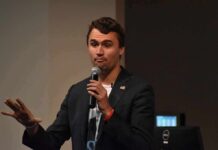
A powerful California Democrat insider secretly helped the FBI expose a corruption scheme inside Gavin Newsom’s orbit — and still sits on a state board while unanswered questions pile up around $180,000 in political cash.
Story Snapshot
- Democratic consultant Alexis Podesta is confirmed as an unindicted co-conspirator in the federal fraud case tied to former Gavin Newsom chief of staff Dana Williamson.
- Campaign records show $180,000 moved from a dormant Xavier Becerra campaign account through Podesta’s firm to the spouse of another insider, before the FBI probe exploded.
- Podesta’s lawyer says she stopped payments once warned they were improper and that she did not know of any fraud, yet she reportedly recorded calls for the FBI.
- Despite her co-conspirator label and FBI cooperation, Podesta has not been charged and still serves on a key California public insurance board.
A Dem Power Player at the Center of a Corruption Probe
California lobbyist and consultant Alexis Podesta has long moved in the highest circles of Democratic power in Sacramento. She previously served in Governor Jerry Brown’s administration and advised major corporations, including large entertainment and utility companies. Her name surfaced publicly after federal prosecutors unsealed an indictment against Governor Gavin Newsom’s former chief of staff, Dana Williamson, on twenty-three counts of bank fraud, wire fraud, and related offenses tied to political money. In that indictment, an unnamed co-conspirator later confirmed as Podesta was described as helping move funds that investigators say were misused.
The case centers on a plan to pull hundreds of thousands of dollars out of a dormant campaign account connected to Xavier Becerra, a longtime Democrat now running for governor. Prosecutors say Williamson, while serving as Newsom’s chief of staff, worked with allies to funnel money from the old “Becerra for Superintendent of Public Instruction 2030” committee and route it toward the personal benefit of Becerra’s former chief of staff, Sean McCluskie. CalMatters reviewed campaign finance reports and found that a total of $180,000, mostly in $10,000 chunks, went from that dormant committee to a consulting firm called Podesta Company.
Following the Money: $180,000 Through Podesta’s Firm
Those same finance records then show that Podesta Company transferred the $180,000 on to an account controlled by McCluskie’s spouse, described as payment for consulting work. Federal court filings and media summaries say two other insiders, lobbyist Greg Campbell and McCluskie himself, have already pleaded guilty to conspiracy charges linked to this scheme and now await sentencing. This leaves Podesta in an unusual spot: named in the paper trail of the transfers, identified by her own lawyer as the co-conspirator in the indictment, yet not charged with any crime and still active in state public life.
Podesta’s attorney, Bill Portanova, has tried to draw a clear line between her and the alleged fraud. He says she simply inherited Williamson’s clients when Williamson left consulting to join Newsom’s office in late 2022, and that Podesta saw nothing odd about the payments at first. According to Portanova, once Podesta “was advised that these payments were not proper, the payments immediately ended,” and she has been fully cooperative with federal investigators ever since. His public statements stress that he believes she “should not be charged,” arguing she lacks criminal intent or liability in the case.
The FBI Wire and the Role of an Unindicted Co-Conspirator
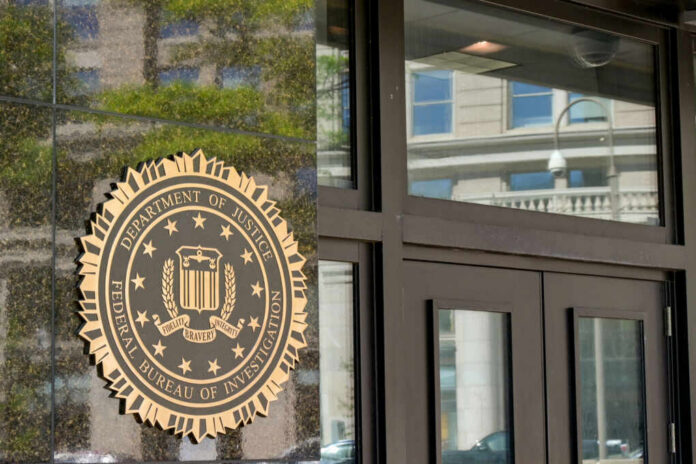
The story grew more explosive when reports revealed that Podesta did more than turn off the money spigot; she also began secretly helping the Federal Bureau of Investigation (FBI). The Sacramento Bee reported that, according to the indictment, Podesta recorded conversations between herself and Williamson after she began cooperating with the investigation. Her attorney has confirmed she is the unindicted co-conspirator described in those federal documents and that she is working with investigators, even as she keeps silent in public. For many readers, the image is striking: a longtime Democratic insider quietly wearing a wire while federal agents listen in on the governor’s inner circle.
That inner circle learned just how far the FBI reached when letters landed in mailboxes across Sacramento in 2024. Those letters told lobbyists and consultants that agents had intercepted their calls and text messages over a four-month period while Williamson, then Newsom’s chief of staff, was under surveillance. The New York Times described the chill that ran through California’s political class as people realized their dealings, and sometimes casual chatter, had been captured on tape during the probe. For a political culture already known for tight ties between lobbyists, consultants, and state officials, the revelation was a harsh spotlight on how influence really works.
Cooperation, Silence, and Ongoing Public Power
Even with these details, key questions about Podesta’s knowledge and intent remain unanswered. She has not given sworn testimony in public, nor has she offered a detailed personal account of why the $180,000 flowed through her firm to McCluskie’s household. Side B of the debate, laid out mostly by her attorney and sympathetic analysts, argues that she was an unwitting participant and that her cooperation shows she stands on the side of law and order. Side A points to the clear money trail and her label as a co-conspirator and asks how such a central player in the payments can escape any formal charge.
🚨Breaking: FBI had a mole inside Gavin Newsom’s inner circle. Democratic ally Alexis Podesta allegedly wore a wire during a corruption probe as the investigation into Newsom’s @GavinNewsom’s corrupt office expands and his former chief of staff faces charges. pic.twitter.com/KHaaserSux
— Stan Wilson (@StanWil14145920) July 3, 2026
Her continued role on the State Compensation Insurance Fund board adds to that tension. Despite the indictment’s claims and the FBI wire, Podesta still holds that public appointment, which oversees a major state-run workers’ compensation insurer. For conservatives who watched the left preach about “democracy” and “ethics” while attacking Trump-world figures as “unindicted co-conspirators,” this case feels familiar. Federal law often lets prosecutors name people as unindicted co-conspirators to secure cooperation or sidestep complex trials, but the American Civil Liberties Union has warned that this practice can smear reputations without giving the accused a clear day in court.
Why This Matters Beyond California
The Podesta story fits a wider pattern in modern politics, where insiders can be deeply tied to questionable schemes yet float in a grey zone between guilt and innocence. American Oversight has documented how federal indictments in other high-profile cases, including those aimed at Trump allies over election disputes, listed multiple unnamed co-conspirators who were never charged but heavily implicated. For readers concerned about equal justice, the lesson is clear: the label “unindicted co-conspirator” can be both a tool for prosecutors and a shield for institutions that want to keep certain players in place, even after serious questions arise about their actions.
Sources:
nypost.com, sacbee.com, youtube.com, calmatters.org, nbcnews.com, thehill.com